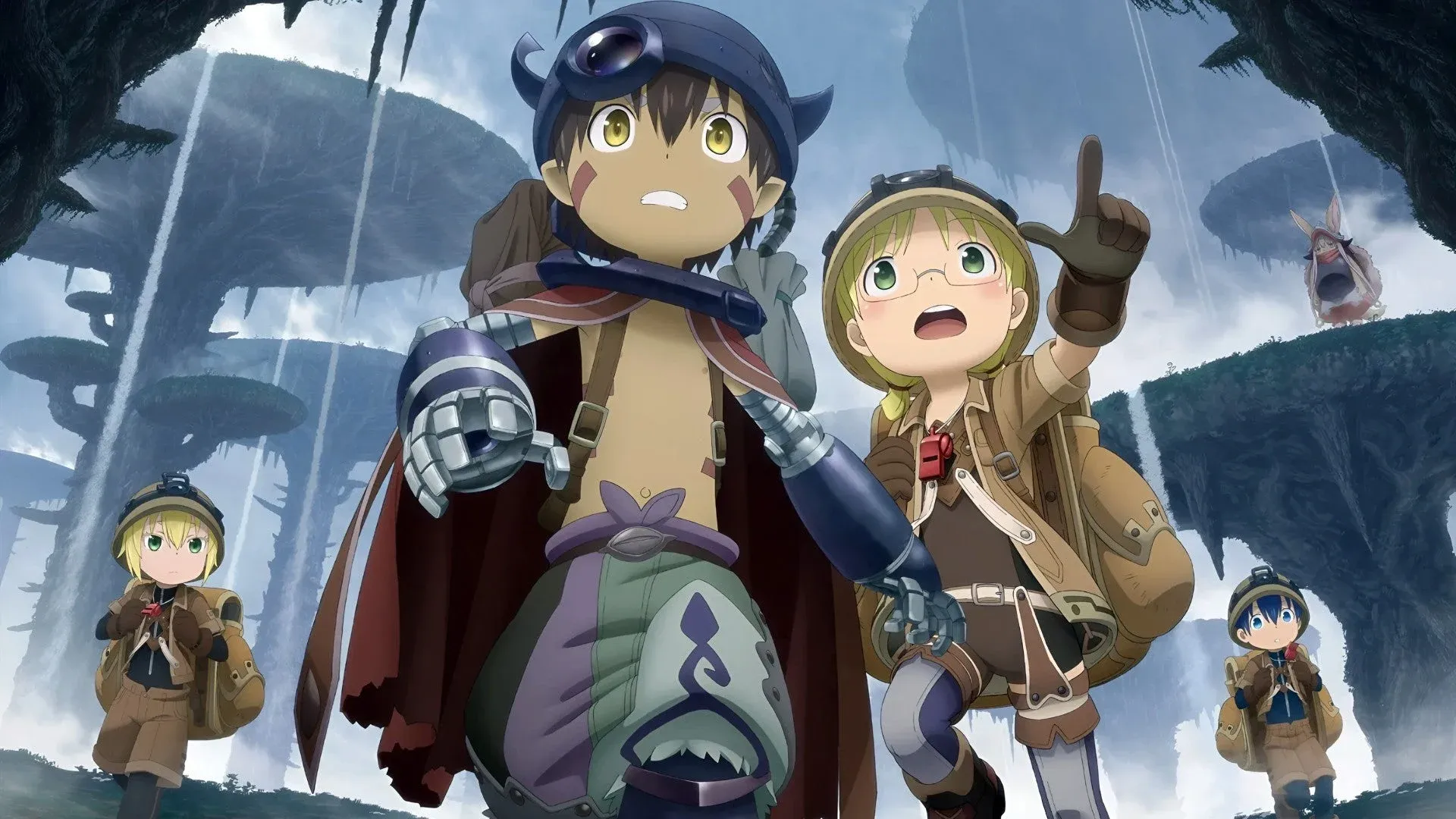

In Made in Abyss, the journey down is only half the danger. Climbing back toward the surface triggers the Curse of the Abyss, a phenomenon that can cause nausea near the rim, devastating injuries farther below and even death or transformation at extreme depths. That single rule makes Riko and Reg's adventure fundamentally different from a normal expedition: the farther they go, the less likely they are to come home.
The curse, also called the Strains of Ascension, is linked to the Abyss's mysterious force field. Each layer has characteristic effects when a person moves upward. Here is how the seven commonly described layers differ, why Nanachi understands the phenomenon, and what the story still leaves uncertain. Spoilers follow for the first anime season, Dawn of the Deep Soul and Season 2.
What is the Curse of the Abyss?
The Curse of the Abyss is the name for the harmful effects of ascending inside the enormous pit. Delvers may descend without experiencing these particular symptoms, but moving upward through the same area exposes them to the Strains of Ascension. Severity depends on depth. The curse is not simply altitude sickness, ordinary exhaustion or an enemy's attack; it is an environmental hazard unique to the setting.
Even a successful descent creates a problem. An explorer can survive predators and find rare relics, only to discover that retreating is more dangerous than advancing. Cave Raiders therefore organize their journeys around a restriction that cannot be solved by carrying extra food or climbing faster.
What causes the Strains of Ascension?
Nanachi explains that an invisible force field runs through the Abyss. Think of it as a stack of membranes that can be passed downward more easily than upward. Breaking through that field during ascent produces the curse. This is the explanation demonstrated within the story, not proof that the field's ultimate origin or purpose has been revealed.
The field is uneven. Nanachi can sense its movement and recognize places where it is thinner, sometimes reducing the immediate risk. But ropes, elevators and physical strength do not automatically negate the effects. A person carried upward can still suffer. The story repeatedly distinguishes a clever way around one danger from a universal cure.
All seven layers of the Abyss explained
The names and symptoms below provide a practical overview of the main layers. They are not a complete map of the pit's deepest mysteries. The seventh layer, in particular, should not be treated as fully documented just because fan diagrams assign it a label.
First Layer: Edge of the Abyss
The uppermost layer lies beneath Orth, the city that depends on Cave Raiders and relics. It is relatively accessible, although its wildlife and terrain remain dangerous. Ascending here can produce mild dizziness and nausea. The modest symptoms introduce a warning: even close to home, the Abyss does not let explorers leave without resistance.
Second Layer: Forest of Temptation
The second layer contains the inverted forest and Ozen's Seeker Camp. The curse intensifies into severe nausea, headaches and numbness. These symptoms become especially threatening when someone must climb, balance or flee a creature. Riko's passage through this region demonstrates that surviving a layer is not the same as being able to reverse the journey safely.
Third Layer: Great Fault
The Great Fault is a vast vertical region with precarious routes. Ascending can trigger vertigo and visual or auditory hallucinations. Losing reliable perception near a steep drop is dangerous even before monsters enter the picture. The terrain and the curse reinforce each other, making a seemingly short upward detour a serious decision.
Fourth Layer: Goblets of Giants
The fourth layer is famous for huge plant-like formations and a particularly brutal strain: intense pain and bleeding from the body's openings. Riko's encounter with the Orb Piercer illustrates the trap. Moving upward to escape an attack can make a desperate situation worse. Nanachi's arrival matters because knowledge and medical help become indispensable.
Fifth Layer: Sea of Corpses
The fifth layer includes the Ido Front facility associated with Bondrewd. Its curse can cause severe sensory deprivation, confusion and behavior that endangers the affected person. Someone who cannot reliably see, hear or understand their surroundings may be unable to complete an escape. The film Dawn of the Deep Soul explores how attempts to circumvent these effects can become horrifying in their own right.
Sixth Layer: Capital of the Unreturned
The sixth layer is the point of no return for an ordinary human. Ascending from it causes loss of humanity or death. A White Whistle's journey into this region is therefore called a Last Dive. Hollows, also known as Narehate, show that surviving a transformation is not the same as retaining one's human body, mind or former life.
Season 2 explores the Village of the Hollows and the consequences of reaching this depth. It does not establish that a sufficiently skilled explorer can simply climb back to Orth intact. For Riko, entering the sixth layer turns the search for answers into a choice with apparently irreversible consequences.
Seventh Layer: The Final Maelstrom
Reports of the seventh layer belong to the Abyss's most uncertain territory. It is associated with extreme danger and mysteries beyond ordinary delvers' experience, but precise claims about its curse should not be presented as settled fact. Fan theories about what lies below, or about the pit's ultimate bottom, are not substitutes for confirmed information from the story.
Can anyone avoid the curse?
Some characters are unusual, but exceptions do not make the rule meaningless. Reg's artificial body is not affected like a normal human body, allowing him to move in ways that would injure Riko. Nanachi can read the force field and sometimes choose safer routes. Neither advantage means an ordinary companion can be carried upward through every layer without consequences.
Bondrewd's experiments reveal a more disturbing possibility: shifting the burden of the curse onto another person. The cost is central to Dawn of the Deep Soul. Describing his methods as a simple cure would erase the suffering they require. The film asks viewers to consider what survival means when another life is used to purchase it.
What is the difference between Hollows and the Blessing?
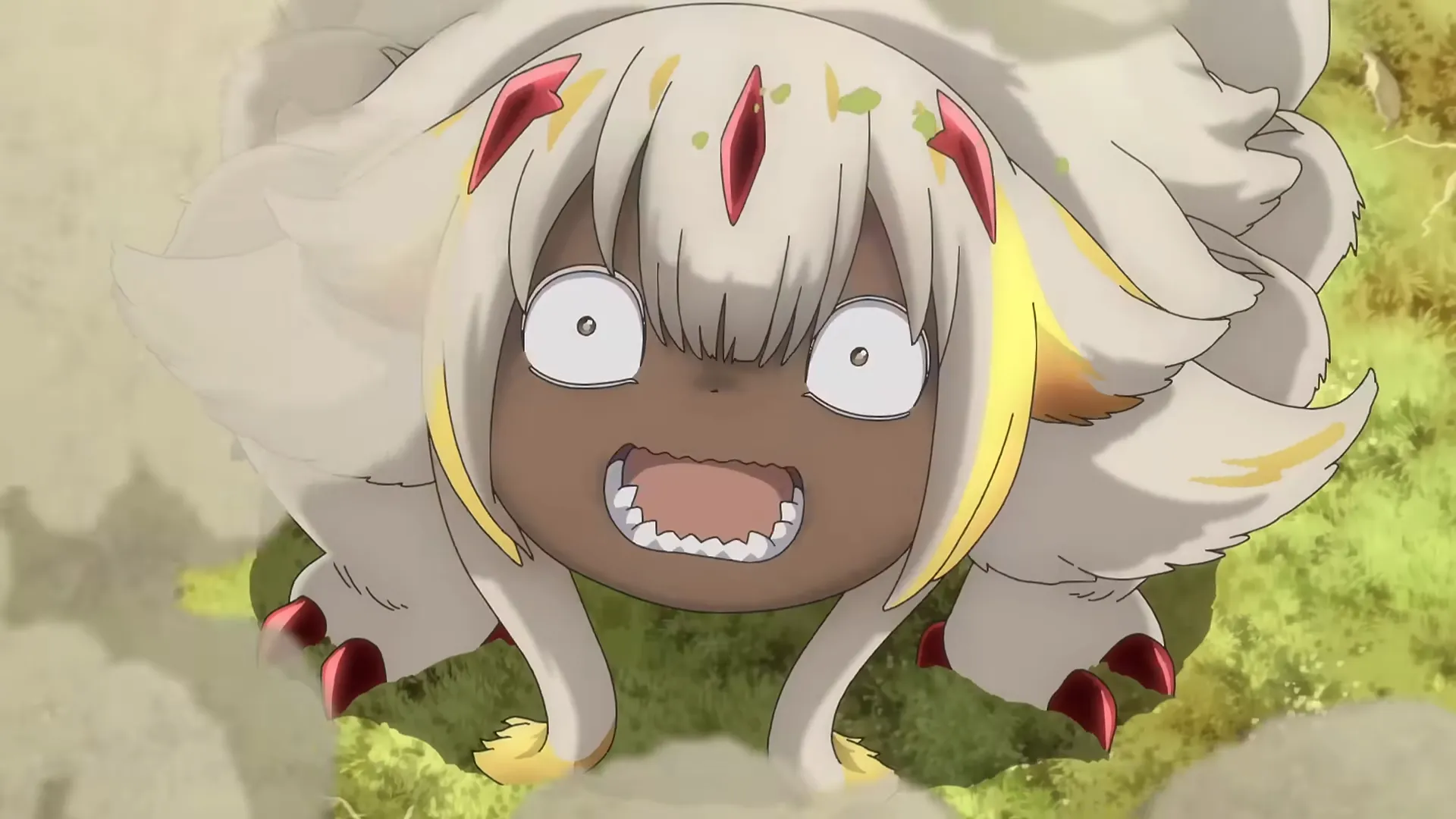
Hollows are beings transformed by the Abyss. Nanachi and Mitty demonstrate how differently the sixth-layer curse can affect two people. Both experience extraordinary changes, but their resulting conditions are not interchangeable. The Blessing is a rare outcome in which the transformation preserves more of the recipient's identity and awareness.
It is not an automatic reward for bravery or a power-up that any Cave Raider can earn. Its circumstances involve suffering and sacrifice. The story's emotional force comes from recognizing the person behind the altered body rather than treating the transformation as an exciting new ability.
Do White Whistles protect explorers from the curse?
No. White Whistles are the highest recognized class of Cave Raiders, and their status allows exceptional expeditions, but the rank itself is not blanket immunity. The story later reveals that a White Whistle also has a special connection to a life-reverberating stone and certain relics. Those properties should not be confused with permission to ascend from the sixth layer unharmed.
Why the curse matters to the story
Most adventure stories allow heroes to explore danger and return home changed but safe. Made in Abyss removes that assurance. Each descent is a commitment, and every beautiful landscape hides a cost. The central question becomes more unsettling than what treasure waits at the bottom: what will the characters sacrifice to reach it?
That tension is explored further in our article on why Made in Abyss is both beautiful and horrifying. The show's visual wonder and its cruelty are part of the same storytelling design.
The Abyss also resembles other fictional frontiers that resist human understanding. Hunter x Hunter's Dark Continent offers a different approach to exploration, where the unknown is threatening precisely because familiar assumptions stop working.
For a comparison, see our Hunter x Hunter Dark Continent explainer. The two settings are not identical, but both make discovery more consequential than simply winning battles.
What is still unknown?
The origin of the pit, the full purpose of the force field and the rules of its deepest regions remain part of the larger mystery. Guides should distinguish the effects demonstrated in the anime from later manga developments and speculation. Explaining the known dangers does not require pretending that every unanswered question has already been solved.
Readers who enjoy imaginative fantasy governed by costly rules may also appreciate our look at Witch Hat Atelier's magical world. It approaches discovery differently, but likewise makes consequences matter.
Frequently asked questions
What causes the Curse of the Abyss?
Ascending through the Abyss's mysterious force field causes the Strains of Ascension. Its ultimate origin remains uncertain.
Does descending into the Abyss trigger the curse?
The familiar curse is associated with upward movement, not ordinary descent. Going down remains dangerous for many other reasons.
Can Reg climb out of the Abyss?
Reg's artificial body reacts differently from a human's, but carrying a human upward does not automatically protect that person.
Why is the sixth layer a point of no return?
An ordinary human ascending from the sixth layer risks death or losing their humanity, making a Last Dive effectively one-way.
Is the seventh layer's curse fully known?
No. The deepest territory remains mysterious, so detailed claims about its effects should be treated cautiously.
Frequently asked questions
Frequently asked questions
What causes the Curse of the Abyss?
Ascending through the Abyss's mysterious force field causes the Strains of Ascension. Its ultimate origin remains uncertain.
Does descending into the Abyss trigger the curse?
The familiar curse is associated with upward movement, not ordinary descent. Going down remains dangerous for many other reasons.
Can Reg climb out of the Abyss?
Reg's artificial body reacts differently from a human's, but carrying a human upward does not automatically protect that person.
Why is the sixth layer a point of no return?
An ordinary human ascending from the sixth layer risks death or losing their humanity, making a Last Dive effectively one-way.
Is the seventh layer's curse fully known?
No. The deepest territory remains mysterious, so detailed claims about its effects should be treated cautiously.