
The difference between a pretty drawing and a great anime design
The most beautiful female anime character designs do more than look impressive in a screenshot. They tell viewers who someone is, how a fictional world works and what conflicts a story may explore. Silhouette, color, costume, facial expression and movement all matter. A design is particularly successful when it continues to communicate character even after the framing changes from a dramatic portrait to an ordinary conversation.
This ranking is an analysis of character-design craft, not a ranking of which fictional character is physically attractive. Characters of different ages appear here, including teenage heroines, because the discussion concerns visual storytelling, costumes and animation rather than sexuality or romantic appeal. We consider established television series and films, and acknowledge that long-running properties have multiple designs and adaptations. The rankings are editorial opinions, not official awards.
Our four design principles
First is silhouette: can the character be recognized through outlines and proportions without a detailed face? Second is visual storytelling: does the costume or styling tell us something relevant about personality, background or role? Third is adaptability: does the design continue to work in movement, emotion and varied lighting? Fourth is symbolism: do repeated shapes, colors or accessories gain meaning as the story develops?
These criteria make it possible to compare radically different looks without pretending there is a single standard of beauty. A restrained military uniform can be as well designed as a magical transformation costume. We also distinguish a character's official design from fan art, which often modifies features and proportions in ways the original production never intended.
14. Akane Tsunemori — Psycho-Pass
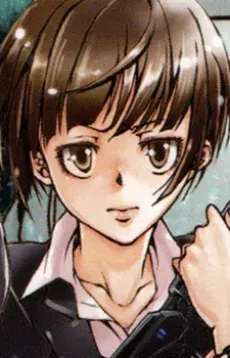
Akane's relatively ordinary professional appearance matters in a society obsessed with measuring behavior. Her simple silhouette and practical styling help place her within the institutional world of Psycho-Pass rather than marking her as a supernatural exception. The visual contrast between this understated investigator and the technology around her is a useful recurring storytelling device.
As she gains confidence, her fundamental appearance need not radically change to suggest maturity. Posture, composition and expression carry the difference. That is a sophisticated design decision: the character gains depth without requiring a new outfit every time she reaches a moral turning point. The official franchise credits character designers alongside its science-fiction production team, underlining that those visual choices are part of the show's constructed world.
13. Riza Hawkeye — Fullmetal Alchemist: Brotherhood
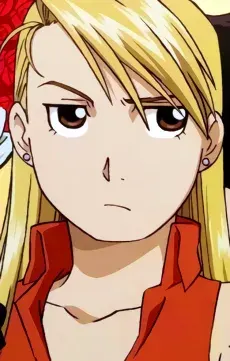
Riza uses one of the most disciplined designs in the series. A military uniform, restrained color palette and controlled gestures communicate her professionalism before anyone explains her rank or skill. Her hair also gives her a recognizable silhouette without compromising the practicality of a soldier's everyday work.
The design becomes more expressive as the viewer learns what she carries emotionally. A small change in her eyes or shoulders can suggest the weight of responsibility. Riza's appearance is not meant to distract from a scene; it establishes a reliable visual center within increasingly chaotic political and supernatural conflicts. That makes restraint itself memorable.
12. Nico Robin — One Piece
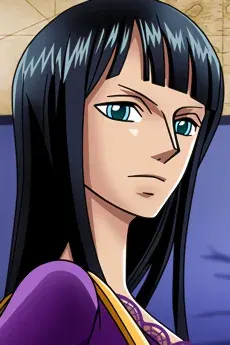
Nico Robin is challenging to evaluate because her clothing changes so frequently across One Piece's enormous adventure. Yet a design identity survives those variations: a composed facial expression, a distinctive sense of fashion and a restrained way of moving amid more exuberant crewmates. Her look often presents her as observant before her dialogue confirms her academic interests.
This continuity matters for a serialized character. A wardrobe should be able to change with climate and setting without erasing identity. The official One Piece character profile emphasizes her archaeological work and pursuit of hidden history; the outward calm fits that scholarly role. Related historical context appears in our Poneglyph guide.
11. Yor Forger — Spy x Family
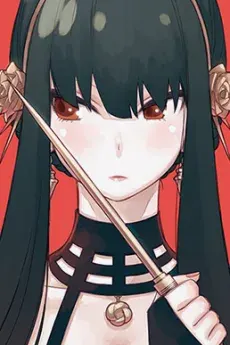
Yor's design solves a narrative challenge with two contrasting visual languages. The ordinary office employee has modest clothes and an approachable appearance, while the Thorn Princess wears a dark, formal assassination outfit with an immediately recognizable profile. Both remain recognizably Yor, and the difference expresses the secrecy at the center of Spy x Family.
Crucially, the transformation is not simply a glamorous costume change. Her posture, confidence and physical movement shift with context. The official character description establishes her dual life as a city-hall worker and killer who wants to protect her family. In design terms, that gives every contrast a clear storytelling purpose.
10. Boa Hancock — One Piece
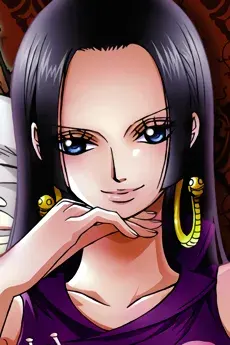
Boa Hancock's regal fashion and theatrical silhouette communicate status before her political title is spoken. Her elegant bearing, expressive gestures and visual association with the Kuja Pirates make her feel like an emperor rather than merely another strong fighter. The flamboyance works particularly well with Eiichiro Oda's elastic approach to facial expression and comedic exaggeration.
A great character design also accommodates contradictions. Hancock can look intimidating in one scene and comically vulnerable in another without becoming visually unrecognizable. Her official character profile establishes her position as Amazon Lily's ruler, which explains why the ceremonial quality of her clothing matters.
9. Motoko Kusanagi — Ghost in the Shell
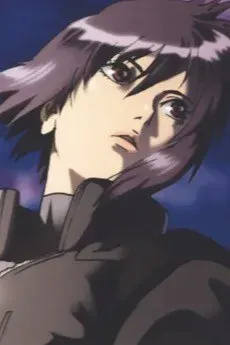
Motoko's appearance changes between the original film, Stand Alone Complex and later adaptations, so reducing her design to a single outfit misses the point. Each production interprets the visual relationship between cybernetic technology, an individual body and a professional investigator. Some versions emphasize sleek futurism; others favor a more utilitarian tactical presence.
The essential strength is thematic. Motoko looks at home in a world where bodies can become platforms for technological change, yet her personality resists being reduced to a machine. A strong cyberpunk design should raise questions as well as look modern. Our Ghost in the Shell watch-order guide helps identify the versions before making comparisons.
8. San — Princess Mononoke
San's wolf pelt, face markings and simple practical clothing show her allegiance to the forest and its creatures. This is not a fashionable disguise or an elaborate armor set. It makes her appear integrated with the wild environment, as though the character has chosen a different culture and identity from the human settlement across the conflict.
The design is particularly effective when set against Lady Eboshi and Iron Town. GKIDS' official film synopsis describes San as a girl raised by wolves who opposes the destruction of her home. Her visual identity makes that conflict visible without explanation. The bold markings also remain readable during fast, emotionally intense animation.
7. Lady Eboshi — Princess Mononoke
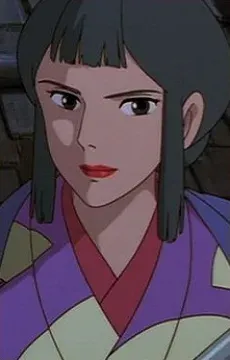
Lady Eboshi presents a visual counterargument to San. Her composed appearance and command of the industrial settlement indicate political authority, planning and a distinctly human project of reshaping the environment. She is not designed as a cartoon villain whose clothes announce evil. Her calm dignity communicates the values she believes she is defending.
This makes the design more sophisticated than a simple good-versus-bad contrast. Both women can be visually admirable while representing incompatible visions of the world. Their opposing aesthetics help tell a story about land, work, survival and responsibility. The film's imagery asks viewers to consider what each society protects and what each destroys.
6. Utena Tenjou — Revolutionary Girl Utena
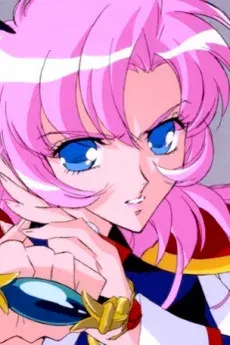
Utena's rose-themed imagery and princely school uniform express the series' deliberate challenge to conventional fairy-tale roles. Pink hair and tailored clothing give her a distinct silhouette; the costume also tells us what sort of hero she wants to become. She is not dressed like a princess waiting to be rescued. She is attempting to occupy the role of the prince.
That symbolic choice makes her design central to the drama's questions about identity and social expectations. VIZ describes Revolutionary Girl Utena as a story built around mysterious duels at Ohtori Academy and the prince the protagonist hopes to encounter. Every recurring rose and uniform detail reinforces the show's theatrical language.
5. Frieren — Frieren: Beyond Journey's End
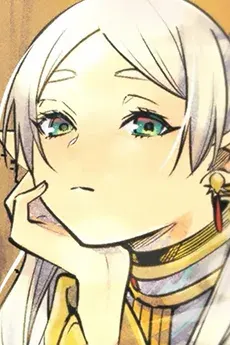
Frieren's pale hair, pointed ears and quiet travel clothing make her instantly identifiable, but the design does not rely on visual extravagance. She resembles a conventional fantasy elf at first glance. Gradually, the simplicity becomes meaningful because her story is about how someone who lives for centuries might overlook everyday human experiences.
MADHOUSE's official introduction identifies her as a mage who outlives the hero's party and sets out to understand people better. Her calm silhouette and understated expressions suit that perspective. The animation asks audiences to notice small gestures that another fantasy production might pass over. For the magical world around her, read AnimeSparks' Frieren magic-system guide.
4. Nana Osaki — Nana
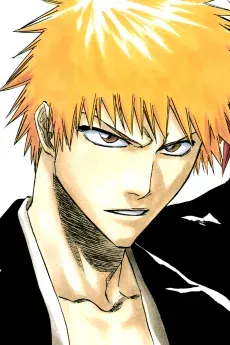
Nana Osaki's visual identity is built from rock performance and personal ambition. Her punk-inspired wardrobe, dramatic makeup and jewelry are not an isolated fashion exercise. They communicate how seriously she takes music and how carefully she projects independence in public. A single frame can tell you that performing is central to her life.
VIZ's official Nana synopsis presents her as an aspiring musician arriving in Tokyo and forming a complicated friendship with another young woman sharing her name. That narrative context is why the fashion works. The image of self-possession contrasts with vulnerability, jealousy and longing. Her design is convincing precisely because the clothes feel chosen by a particular person rather than assigned to a character type.
3. Sophie Hatter — Howl's Moving Castle
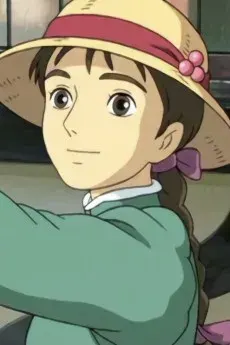
Sophie proves that one of animation's most beautiful design ideas can be a change in age rather than a glamorous outfit. The hat-maker is transformed by a curse into an elderly woman, and the visual contrast becomes central to her relationship with confidence and self-worth. The film repeatedly uses posture and expression to reveal an inner life that is not fixed by outward appearance.
The character design also resists a conventional heroic makeover. Her courage grows through practical action and care for others, not through acquiring a weapon or fashionable armor. GKIDS' official film synopsis describes the curse and Sophie's journey into Howl's moving castle. The design gives the story a physical way to ask what we see when we look at ourselves.
2. Violet Evergarden — Violet Evergarden
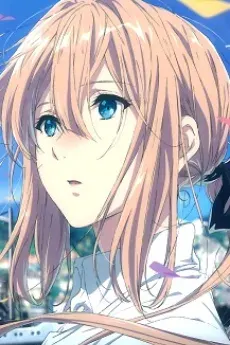
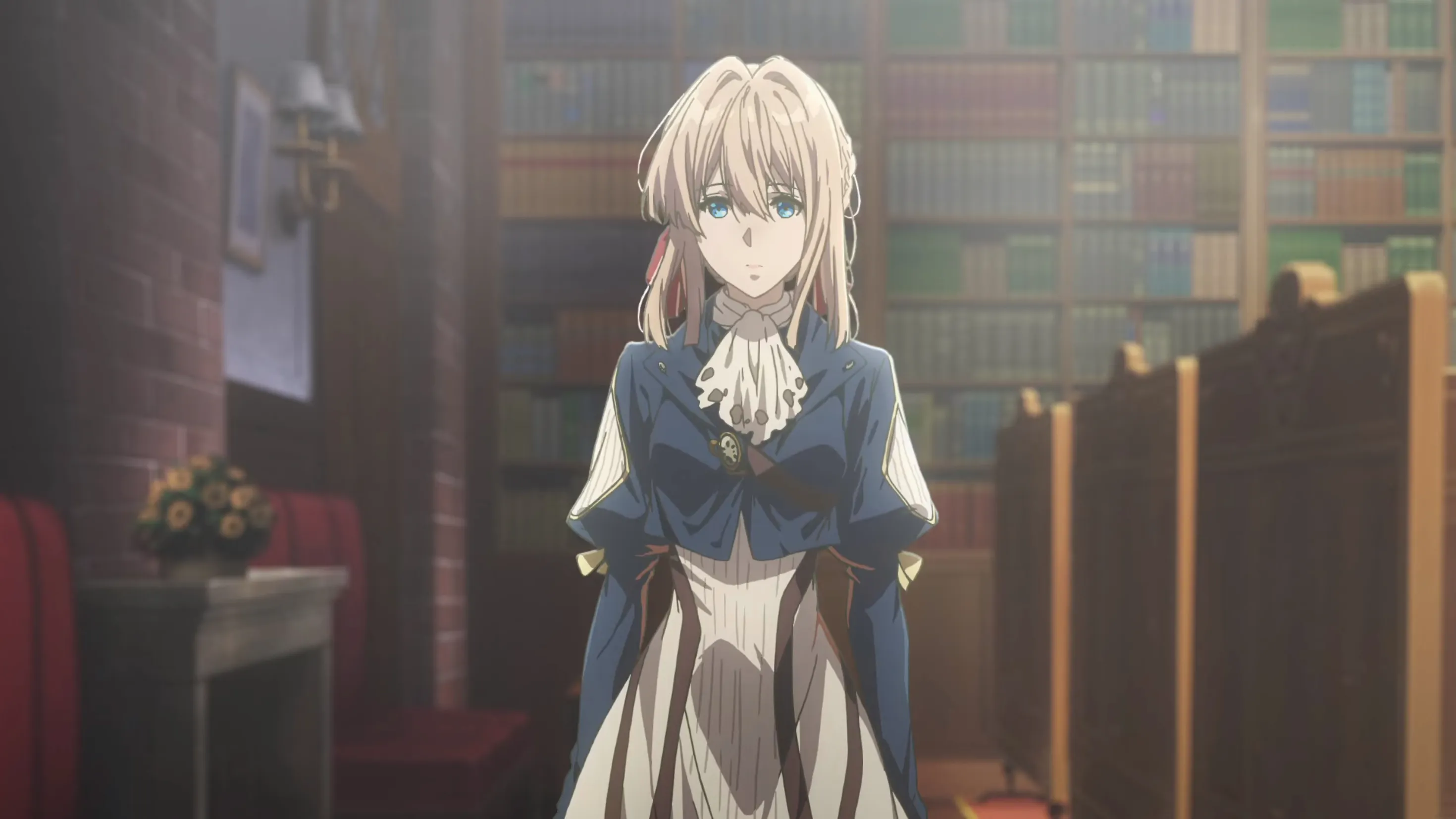
Violet's carefully constructed clothing, ribbons, flowing hair and mechanical hands form a design that balances refinement with visible traces of war. At first, she seems composed almost to the point of stillness; gradually, tiny shifts in facial expression become emotionally overwhelming. The design has to remain readable through quiet conversations, hand movements and letter-writing, and it does.
Kyoto Animation's official introduction connects her new work as a letter writer to her attempts to understand the meaning of love and other people's feelings. Her polished costume therefore exists in tension with uncertainty beneath the surface. Visual beauty here is not decoration. It supports a story about learning to communicate.
1. Sailor Moon — Pretty Guardian Sailor Moon
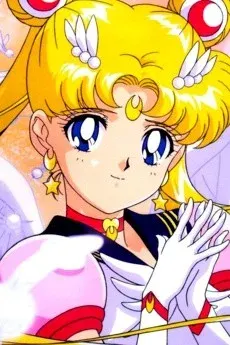
Sailor Moon tops this ranking for a design whose shapes and colors remain recognizable even outside its original era. The sailor-inspired uniform, bold bow, distinctive hairstyle and transformation imagery create one of animation's most efficient visual identities. Viewers can recognize her through silhouette alone. The design also makes teamwork readable by giving the wider group a shared system of colors and planetary motifs.
Toei Animation's official description introduces Usagi as a schoolgirl transformed into a guardian of love and justice. The costume expresses that transformation without erasing her ordinary personality. Sailor Moon's strength as visual storytelling is not simply nostalgia. It is the clarity with which an everyday protagonist becomes part of a larger magical world.
Why visual storytelling matters more than detail
One reason simple anime designs endure is that animation demands consistency. A complicated illustration may look impressive on a poster but become difficult to reproduce naturally during speech or action. The most successful designs balance distinctive shapes with enough flexibility for expressions to communicate emotion. A uniform can work across thousands of drawings, while a carefully chosen accessory can become a character's signature.
Symbolism also becomes stronger through repetition. Utena's roses, Violet's prosthetic hands, Sophie's changing appearance and San's wolf pelt all connect visual decisions to story themes. The audience learns to read these details intuitively. That is more valuable than adding elaborate clothing without narrative purpose.
Frequently asked questions
Which anime character has the most iconic female design? Our editorial choice is Sailor Moon because her silhouette, color system and transformation costume remain immediately recognizable.
Is character design the same as attractiveness? No. This article evaluates storytelling through visual art, including underage characters in a nonsexual design context.
Why compare films and TV anime? Both use silhouettes, colors and repeated symbols to create character identity, although their production demands differ.
Can a simple design beat a complex one? Yes. Clarity and expressive adaptability often matter more than the number of decorative details.
The lasting power of a character's silhouette
Sailor Moon, Violet Evergarden, Sophie Hatter, Nana Osaki and Frieren demonstrate five very different design philosophies. One uses a heroic transformation icon, one uses precise elegance, one turns age into storytelling, one communicates music through fashion, and one makes emotional restraint visible. The common principle is coherence: each design creates expectations that the writing and animation then explore. If you want to understand why a character looks memorable, ask what her appearance helps the story say.
Frequently asked questions
Frequently asked questions
What makes a beautiful anime character design?
Recognizable silhouette, visual storytelling, expressive animation and coherent symbolism matter more than detail alone.
Sources & references11 sources
- Toei Animation official Sailor Moon description
- Kyoto Animation official Violet Evergarden introduction
- GKIDS licensed Howl's Moving Castle synopsis
- GKIDS licensed Princess Mononoke synopsis
- VIZ Revolutionary Girl Utena series page
- VIZ official Nana series page
- MADHOUSE official Frieren story
- ONE PIECE Nico Robin official profile
- ONE PIECE Boa Hancock official profile
- SPY×FAMILY official character page
- Psycho-Pass official franchise site