
A character can tell the truth as they understand it and still mislead you. That is the pleasure of anime built around unreliable perspectives: what you see may be incomplete, emotionally distorted, or framed by someone who has every reason to be wrong. The strongest examples do not merely spring a twist at the end. They teach you to notice the distance between an event, a character's interpretation of it, and the story's visual presentation.
This spoiler-light ranking looks at ten anime and anime films that use subjective storytelling in different ways. We distinguish a genuinely unreliable viewpoint from a story that simply hides information. The list is ordered by how thoughtfully the device changes your experience, not by popularity, audience scores, or the size of a final reveal. Knowing that perception matters is a mild premise spoiler for some entries, so readers who want to go in completely blind should stop at the quick-picks section.
Quick picks and how to choose
For a single unsettling film, start with Perfect Blue. For a funny, self-serving narrator, choose The Tatami Galaxy. For a community in which every account is incomplete, try Paranoia Agent. For horror built around conflicting perspectives, Higurashi is a demanding choice. For a lighter example of a protagonist misunderstanding the world, The Eminence in Shadow offers a comic counterpoint. These works do not all feature a literal voice-over narrator; in animation, the camera, editing, memory and viewpoint can perform the same function.
What counts as an unreliable narrator in anime?
An unreliable narrator is a storytelling perspective whose account cannot be accepted without question. That can mean a deliberate lie, selective memory, mistaken perception, a biased moral judgment, or an image that places the audience inside a character's confusion. An ordinary mystery with a hidden culprit is not automatically an unreliable-narrator story. Nor is a fantasy with unexplained rules. Our test is whether the viewpoint itself materially affects what the viewer believes.
Use this spoiler-free reference: Perfect Blue uses unstable perception; The Tatami Galaxy uses self-justifying recollection; Paranoia Agent uses competing public stories; Higurashi uses restricted, conflicting viewpoints; School-Live! uses a protective personal framing; Monogatari uses subjective first-person narration; Odd Taxi uses tightly controlled visual perspective; Ergo Proxy uses fractured memory and identity; Death Note uses moral self-justification; The Eminence in Shadow uses comic misinterpretation. These are editorial categories, not official genre labels or measured scores.
10. The Eminence in Shadow: a hero who misreads his own story
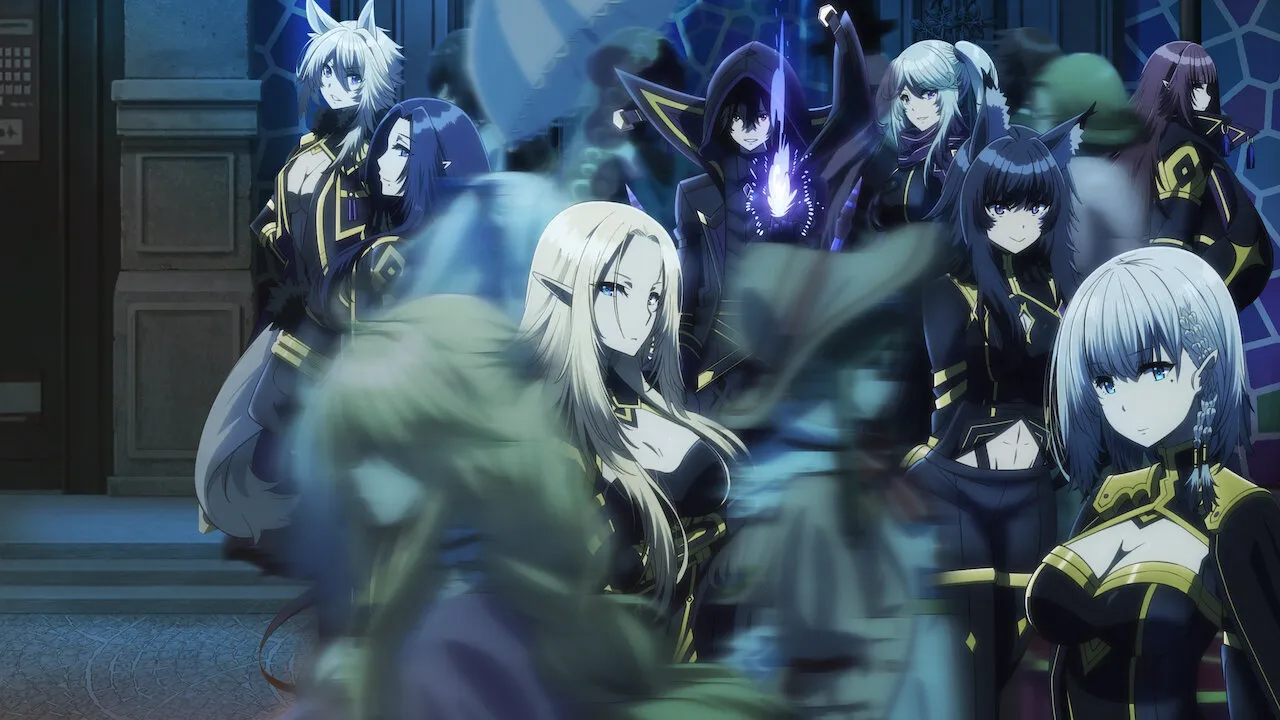
Cid Kagenou wants to perform the role of a secret mastermind. His extravagant role-playing is funny because his understanding of the situation often differs sharply from the seriousness with which other characters experience it. That makes him an unusually accessible example of interpretive unreliability: he is not necessarily lying to the viewer, but his confident explanations are poor guides to what is happening around him. The gap between intention and consequence drives the comedy. The limitation is important: this is primarily a self-aware action fantasy, not a psychological mystery. Readers who want more context can explore our review of why The Eminence in Shadow works.
9. Death Note: when a convincing argument is not the truth
Light Yagami's internal reasoning is coherent enough to pull an audience into his worldview, especially early on. Yet a character's confidence in his moral mission does not make his judgments objective. Death Note's trick is not that its events are constantly hallucinated. It is that access to Light's planning can make his justifications feel more authoritative than the human consequences of his actions. Pay attention to moments when a practical decision is dressed up as a principle. This is unreliable ethical framing rather than a puzzle about whether the camera is showing reality. Our Death Note review considers why that conflict still works.
8. Ergo Proxy: memory gaps as an identity problem
Ergo Proxy opens with a society that seems to possess firm categories for humans, artificial beings and threats outside its walls. Its characters do not have equally firm access to their own histories. Vincent Law's uncertainty makes the audience's picture of the world provisional, while Re-l's investigation gives a different way to test claims. The most useful viewing question is not simply “what is the twist?” but “who knows this, and how?” The series can be opaque, and withholding exposition is not by itself unreliable narration. Its place here comes from the way personal memory and self-knowledge complicate the information we receive. Our Ergo Proxy explainer contains major spoilers, so save it for afterward.
7. Odd Taxi: an ordinary viewpoint with extraordinary consequences
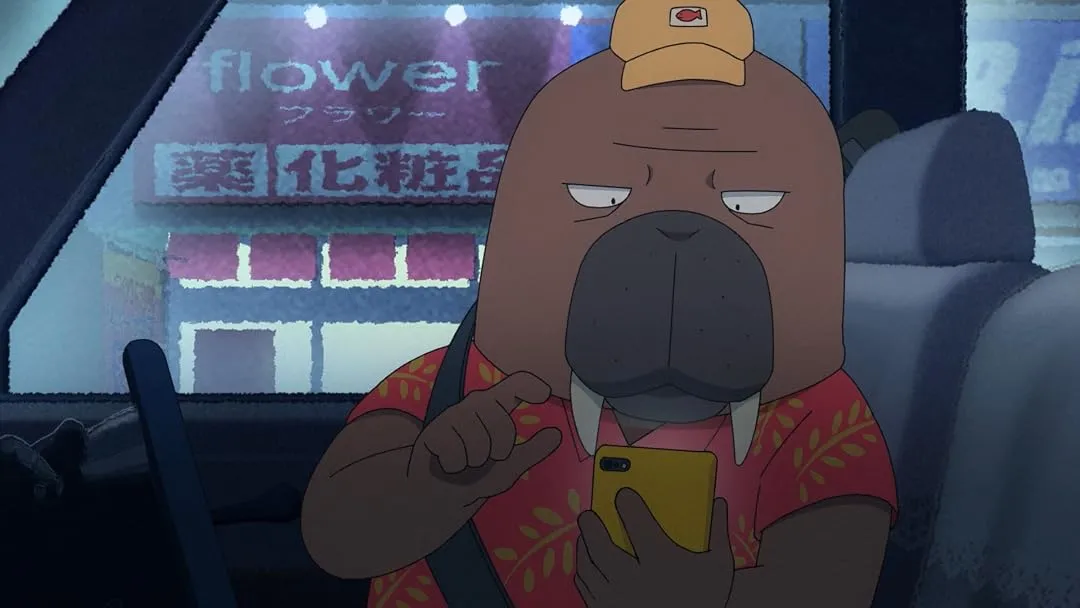
Odd Taxi begins with a quiet cab driver, Odokawa, and a network of conversations across Tokyo. Its dialogue is unusually important: casual exchanges gradually connect people whose motives and knowledge differ. The show also asks viewers to be careful about accepting visual presentation as neutral. Explaining exactly how would spoil a central pleasure, so the safest advice is to notice what characters say about one another, what the camera emphasizes, and which assumptions you supply yourself. Unlike a conventional first-person narrator, the series uses an audiovisual frame to guide interpretation. For readers who prefer cases with observable clues, our mystery anime ranking compares Odd Taxi with more traditional detective stories.
6. Monogatari Series: the personality of the storyteller
Koyomi Araragi's voice, digressions and judgments are central to how many Monogatari stories feel. Other characters' perspectives also take center stage across the franchise. That variety exposes an important principle: the same person can look different when the person telling the story changes. Fast text flashes, stylized backgrounds and impossible-seeming compositions are expressive choices rather than literal documentation of every event. Do not assume that every visual exaggeration means someone is lying. The pleasure is in noticing how affection, embarrassment, guilt and self-image shape the telling. Because the franchise has multiple seasons and films, our Monogatari watch-order guide is a more useful companion than jumping between random arcs.
5. School-Live!: when a comforting frame becomes suspicious
School-Live! uses the familiar visual language of a cheerful school-club series while gradually encouraging viewers to question how its central characters experience their surroundings. This is a particularly effective form of unreliable perspective because animation can put a character's emotional version of a place on screen without announcing a change in viewpoint. The effect depends on contrast, so even the premise is best approached with minimal advance reading. It also deserves a content warning: despite its approachable surface, the series involves horror, danger and distress. Its lesson is that an inaccurate perspective need not be malicious; it can reflect the way someone copes with circumstances they cannot face directly.
4. Higurashi: When They Cry: comparing incomplete accounts
Higurashi turns an apparently ordinary rural setting into a web of fear, suspicion and contradictory impressions. Its story arcs reward comparing what different characters know, believe and misinterpret. A suspicious action may look completely different when you understand the context surrounding it. That makes the series more than a collection of shocks, though it is also graphically violent and not a gentle mystery recommendation. Avoid treating each apparent contradiction as a writing mistake, and avoid searching for a complete timeline before watching. The franchise has several installments with different relationships to the original story; the AnimeSparks Higurashi watch-order tool helps distinguish them.
3. Paranoia Agent: the stories a whole city tells itself
Satoshi Kon's television series follows reports and experiences surrounding a mysterious attacker. As the attention shifts among people under pressure, individual accounts begin to reveal as much about the speakers' needs as about the event they describe. The result is not one narrator whose confession can be checked at the end, but a portrait of how rumor, fear and social expectation reshape public reality. This makes it especially relevant to anyone interested in media literacy. Ask whether a scene establishes an event, records a testimony, or shows an interpretation. Those are different forms of evidence. The series is unsettling and sometimes surreal; it should not be reduced to a literal detective puzzle.
2. The Tatami Galaxy: a narrator who edits his own regrets
The unnamed college student at the center of The Tatami Galaxy imagines a rose-colored campus life and repeatedly measures his choices against that ideal. His rapid narration is full of rationalizations and selective judgments about the people around him. As different possibilities unfold, the viewer can see the distance between his self-description and the habits that keep him dissatisfied. Unlike a horror mystery, the unreliable element is often comic and recognizably human. You do not need to solve a hidden crime; you need to notice what the protagonist keeps blaming on circumstance. Its distinctive achievement is making subjective narration the source of both the joke and the emotional insight.
1. Perfect Blue: when the edit itself cannot be trusted
Perfect Blue follows Mima Kirigoe as she moves from idol performance into acting while facing intrusive attention and growing uncertainty about her identity. Director Satoshi Kon uses transitions among performances, memories and everyday scenes to deny the viewer an easy external reference point. The question is not simply whether Mima is honest. The film makes us experience the difficulty of separating what happened from what she fears, remembers or performs. That is why it tops this ranking: unreliability is not a gimmick added to the plot, but a property of the film's visual grammar. It includes mature psychological horror and disturbing material. Our Perfect Blue analysis explores its identity themes in more detail and should be read after watching.
How to watch an unreliable-perspective anime without spoiling it
Keep three columns in your head: observed events, character claims and your own inferences. When a detail appears to conflict with something earlier, first ask whether the story has changed its rules or whether your original interpretation was never established. Notice whose memories are available, whether a voice-over has a motive, and whether editing connects scenes that might not share a straightforward chronology. Do not automatically label a character mentally ill because a scene is ambiguous. Fictional techniques are not clinical diagnoses.
If you prefer a fair-play mystery where clues can be checked against a solution, choose a detective-focused series instead. If you enjoy being made to question the evidence itself, the titles above are a better match. And if you are starting a franchise with sequels, prequels or recap films, use the AnimeSparks watch-order hub to avoid accidental spoilers from watching out of sequence.
Why this distinction matters
Unreliable narration is sometimes used as a synonym for “big plot twist,” but the terms are not interchangeable. A twist changes what you know; an unreliable perspective changes how you evaluate what you thought you knew. Perfect Blue does this through editing, The Tatami Galaxy through self-serving narration, and Paranoia Agent through social storytelling. Their methods are different enough to make a useful comparison rather than a popularity contest. For viewers and critics, the more interesting question is not “did the show trick me?” but “what did it teach me about trusting a point of view?”
Frequently asked questions
Frequently asked questions
What is an unreliable narrator in anime?
A viewpoint that distorts or incompletely represents events through bias, memory, perception or deception. It does not require literal voice-over.
Is Death Note an unreliable narrator anime?
Light's moral framing is biased, although the show generally depicts events clearly. It is a case of unreliable interpretation rather than constant visual deception.
Which unreliable-narrator anime should I start with?
Perfect Blue for a mature film, The Tatami Galaxy for comedy, or The Eminence in Shadow for a lighter fantasy example.
Is Odd Taxi an unreliable narrator story?
Its visual framing encourages assumptions that deserve scrutiny. Discussing the precise device would spoil a major reveal.
Does unreliable narration always mean a plot twist?
No. A viewpoint can remain biased throughout without a final reversal. The technique changes how the audience judges evidence.
Are these recommendations spoiler-free?
The article avoids revealing major outcomes, but identifying unreliable perspective as a theme may itself be a mild spoiler.