
Sports anime can make a single rally feel like the most important event in the world. The more interesting question is what happened before that rally. Did the player learn a repeatable skill? Did a coach correct a mistake? Did the team change its shape? Or did the hero simply discover another impossible move? The most realistic sports anime make the work behind the highlight worth watching.
These ten shows are ranked for how convincingly they portray learning and improving at a sport, not for popularity or animation quality. We compare a specific training lesson with a clear realism caveat for each. Some are excellent at tactics, others at technique or the psychology of competition. None should be used as a substitute for qualified coaching or medical advice.
How we judged realism
We looked for three things: an identifiable skill that can be practiced, visible feedback and adjustment, and respect for constraints such as team roles, opponents, fatigue and failure. The ranking is an editorial judgment, not a numerical scientific-accuracy test. Series premises were checked against official or licensed descriptions; selected rules and training claims were compared with sporting bodies including the FIVB, USTA, IFAB, World Athletics and the All Japan Karuta Association.
A believable volleyball rotation does not prove that every jump is possible. A convincing tennis practice diary does not make a beginner's rapid progress typical. A realistic boxing stance does not make repeated head impacts safe. Those distinctions matter more than handing every show an invented realism score.
At a glance: the best sport and the real lesson
Baby Steps | tennis | targeted practice and opponent notes. Ao Ashi | soccer | positioning and off-ball decisions. Haikyu!! | volleyball | passing, setting and role coordination. Ace of Diamond | baseball | pitcher-catcher tactics. Run with the Wind | distance running | endurance and recovery. Ping Pong the Animation | table tennis | coaching and competitive mindset. Tsurune | kyudo | repeatable form under pressure. Slam Dunk | basketball | fundamentals and rebounds. Chihayafuru | competitive karuta | memory and listening. Hajime no Ippo | boxing | technique, discipline and injury risk.
These are not equally realistic in every respect. The point of the comparison is to tell you what each show gets right before you invest hours in watching it, and what to question when the story needs a dramatic breakthrough.
1. Baby Steps: the clearest example of deliberate tennis practice
Eiichiro Maruo begins as an organized student with little tennis experience. Rather than winning through mysterious talent, he observes opponents, keeps notes and turns weaknesses into specific problems to work on. The licensed Baby Steps synopsis makes his strategic note-taking a defining trait. This is the most persuasive training arc on the list because the story is interested in how a player learns, not only whether he wins.
The real lesson is to practice with a purpose. A player can target shot depth, placement or footwork instead of endlessly hitting balls without feedback. The USTA's target-practice drill illustrates that principle in a real coaching context. The caveat is pace: intelligent observation does not replace years of movement development, match experience and conditioning. Choose Baby Steps if you want to watch a beginner build a system for improvement.
2. Ao Ashi: soccer is about space, not just the player with the ball
Ashito Aoi arrives in an elite youth-club environment and discovers that scoring ability is only one part of football. The Aoashi series synopsis establishes the youth-development setting and coach Fukuda's interest in him. The strongest sequences are not flashy shots but moments when Ashito realizes why another player moved, where an option opened, or how his own positioning affected the team.
That is a recognizable tactical lesson: off-ball movement and defensive responsibility matter even when television cameras follow the ball. Rules matter too, as the IFAB offside law demonstrates. The exaggeration is that complex tactical understanding sometimes arrives as a sudden revelation. Real players need repeated coaching and match experience. For a contrast, our Blue Lock egoism explainer examines a deliberately extreme striker-development philosophy. Ao Ashi is the better choice for grounded team structure.
3. Haikyu!!: volleyball improvement depends on everyone
Hinata and Kageyama must turn a rivalry into an effective partnership. The Haikyu!! series description explains their shared place on Karasuno. What makes the show useful is its attention to how one player's timing depends on someone else's pass, set or defensive read. Even a star attacker needs the rest of the sequence to work.
The FIVB's volleyball rules describe the usual three-touch pattern and the rotation of six players. Those real constraints explain why team organization matters. The show stretches rally time so characters can think aloud and dramatizes exceptional attacks, but its teamwork lesson remains sound. Our Haikyu!! essay on effort and losing explores why practice never guarantees victory. The Haikyu!! watch-order tool helps with seasons, movies and recaps.
4. Ace of Diamond: the pitcher is never working alone
Eijun Sawamura joins Seido and learns that a prestigious baseball program does not owe him a starting place. The licensed Ace of Diamond guide follows his pitching development, teammates and training. Its best detail is the battery relationship: a pitch is not just a throw, but a decision made with a catcher against a specific hitter.
Pitch selection, control, defensive positioning and competition for roles make improvement concrete. Sawamura has to learn what his pitches can actually accomplish, while other pitchers are also getting better. The show exaggerates the psychological intensity of individual at-bats and stretches key moments, but it rarely treats a single signature move as enough to solve every problem. This is the pick for readers who enjoy tactical detail and patient development over quick tournament highlights.
5. Run with the Wind: endurance has limits
Haiji tries to prepare ten university students for the Hakone Ekiden, despite their widely different backgrounds. The licensed Run with the Wind synopsis makes that ambitious goal explicit. The series understands that running improvement is not identical for everyone: confidence, pace, fatigue, injury and motivation complicate the idea of a single perfect training schedule.
Real endurance work must account for workload and recovery. World Athletics' training guidance warns that demanding sessions should be built up over months rather than weeks. The show's major caveat is its compressed, highly ambitious qualification journey for inexperienced runners. That premise stretches plausibility without ruining the story's insight into effort. Our Run with the Wind recommendation explores why its adult cast gives the training a different emotional weight.
6. Ping Pong the Animation: a coach cannot manufacture motivation
Smile and Peco are talented childhood friends who relate to winning in different ways. The licensed series synopsis identifies Smile's reluctance to beat Peco and a teacher who recognizes his potential. The show asks a useful question: why might a player execute a skill in practice yet struggle to use it when winning matters?
Coaching involves identifying an athlete's particular obstacle, not just prescribing more repetitions. Ping Pong is persuasive about fear, confidence, identity and the cost of treating competition as a whole personality. Its expressionist animation is emphatically not literal biomechanics, and its visual metaphors should not be mistaken for a technique guide. Watch it for the psychological side of sport and the possibility that two gifted players may want different futures.
7. Tsurune: archery form is a continuous process
Minato Narumiya struggles with his release after a difficult competitive experience. The official Tsurune story puts that difficulty at the center of his return to kyudo. The series is strongest when it treats a shot as a sequence of actions affected by attention and pressure rather than as a simple test of aiming.
The All Nippon Kyudo Federation describes eight interconnected stages of shooting form. That is the right reference for Japanese kyudo, which should not be casually equated with Olympic target archery. The anime's emotional recovery follows a dramatic arc, so viewers should not expect the same timeline for solving their own technical or psychological difficulties. Its real value is showing how consistency can break down even when someone already knows the movement.
8. Slam Dunk: fundamentals are worth the spotlight
Hanamichi Sakuragi is an awkward basketball newcomer rather than a polished prospect. The Slam Dunk series page establishes his unlikely introduction to the sport. The comedy is broad, but the story makes the basic work of basketball interesting: positioning, rebounding, defense and understanding what teammates need.
A useful basketball lesson is that a possession can be won by someone who never takes the shot. Rules and tactics also vary by competition; FIBA's official rules are a sound reference rather than assuming every league operates identically. Slam Dunk heightens Sakuragi's antics and physical feats, yet its appreciation for unglamorous skills remains a reason to watch. It is an especially good entry point for people who think basketball is only about scoring.
9. Chihayafuru: reaction time starts with listening
Chihaya Ayase becomes devoted to competitive karuta, a Japanese poetry-card contest. The Nippon TV synopsis confirms the school-club premise. It is a genuine competitive discipline, and the series shows how memory, sound recognition, card placement and physical reaction work together under pressure.
The All Japan Karuta Association's English rules explain the 25 cards placed by each player and the importance of memorizing their locations. The anime turns tiny differences in reaction into dramatic confrontations, but the underlying mental and physical demands are real. This is the most unusual recommendation here and a strong choice for readers who want to discover a sport outside familiar ball games.
10. Hajime no Ippo: boxing craft comes with a serious warning
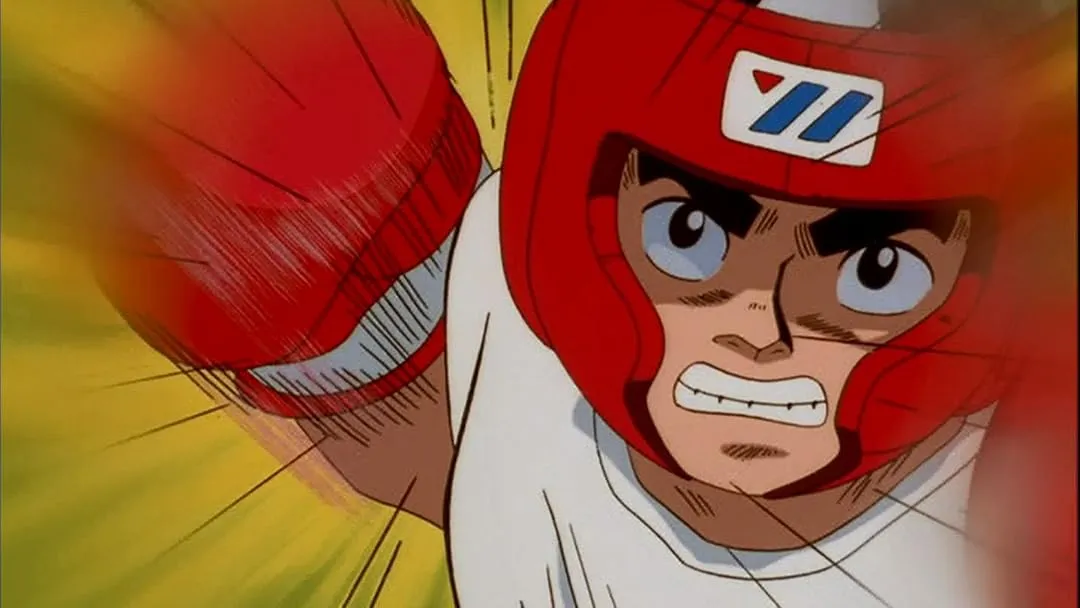
Ippo enters a boxing gym after meeting Takamura and begins learning the sport. The licensed synopsis establishes his novice status and early sparring. The anime pays attention to balance, footwork, conditioning, defense and the slow development of a fighting style. It also makes grueling effort and painful punishment look heroic, which requires caution.
A convincing depiction of training is not an endorsement of absorbing blows. The CDC's concussion guidance warns about repeated head impacts and the need to avoid further injury. Our Hajime no Ippo analysis of the cost of improvement considers the sacrifices in greater depth. The show earns a place for its boxing detail but ranks lower because viewers should be especially careful not to imitate its dangerous extremes.
What to watch first and what to question
Start with Baby Steps for individual practice, Haikyu!! for teamwork, or Ao Ashi for tactical thinking. Ace of Diamond rewards viewers who enjoy detailed strategy. Run with the Wind is best for an adult ensemble, Ping Pong for psychological drama, and Tsurune or Chihayafuru for less familiar Japanese competitions. If Blue Lock inspired your interest, our explanation of flow in Blue Lock can help distinguish its psychological idea from its visual spectacle.
A sports anime can teach you to ask better questions, not replace a coach. Notice what changed between one practice and the next, whether a character learned from feedback, and which opponent or physical limit still matters. For longer franchises, use the AnimeSparks watch-order guide to identify seasons, specials and movies. The best takeaway is not a fictional training schedule. It is the habit of treating improvement as a process.
Frequently asked questions
Frequently asked questions
What is the most realistic sports anime?
Baby Steps is our top choice for detailed practice and match analysis. Ao Ashi excels at soccer tactics and Haikyu!! at volleyball teamwork. No anime is accurate in every scene.
Is Ao Ashi more realistic than Blue Lock?
For conventional youth-club soccer development and positional tactics, Ao Ashi is generally the more grounded depiction. Blue Lock uses an intentionally extreme fictional selection premise.
Does Haikyu!! follow real volleyball rules?
It portrays real concepts such as six-player rotations and passing, setting and attacking roles, but slows rallies and exaggerates dramatic plays.
Which sports anime is best for a beginner?
Baby Steps shows how a newcomer learns tennis, Slam Dunk makes basketball basics entertaining, and Haikyu!! introduces team volleyball clearly.
Is Run with the Wind realistic for new runners?
Its attention to different abilities and recovery is valuable, but its ambitious qualification timeline is not a normal beginner training plan.
Can sports anime teach you how to train?
They can introduce ideas, but they are entertainment. Use qualified coaching, official rules and appropriate professional advice for technique, workloads and injuries.
Sources & references18 sources
- Crunchyroll, Baby Steps series synopsis
- Crunchyroll, Aoashi series synopsis
- Crunchyroll, Haikyu!! series synopsis
- Crunchyroll, Ace of Diamond series
- Crunchyroll, Run with the Wind synopsis
- Crunchyroll, Ping Pong the Animation
- Kyoto Animation, Tsurune official story
- Crunchyroll, Slam Dunk series
- Crunchyroll, Hajime no Ippo series
- Nippon TV, Chihayafuru synopsis
- USTA, tennis target practice
- FIVB, basic volleyball rules
- IFAB, offside law
- World Athletics, speed training for endurance runners
- All Nippon Kyudo Federation, shooting form
- All Japan Karuta Association, competitive karuta rules
- CDC, concussion basics
- FIBA, official basketball rules