
Spoiler warning: This article discusses the opening episodes and the broad direction of Satoru's journey, but does not identify the killer or reveal the final confrontation.
Revival in Erased is an involuntary time-reversal phenomenon that gives Satoru Fujinuma an opportunity to prevent a tragedy. Usually it takes him back only a few minutes, but after his mother's murder it sends him eighteen years into his childhood. The story demonstrates what Revival can do without establishing a scientific explanation or a confirmed origin for the ability.
How the ordinary Revival works
The first episode of the 2016 television anime introduces Satoru as a struggling adult manga artist. His everyday routine is interrupted by a familiar supernatural experience: he finds himself repeating a short stretch of time when something dangerous is about to happen. The repetition gives him information that everyone else around him lacks.
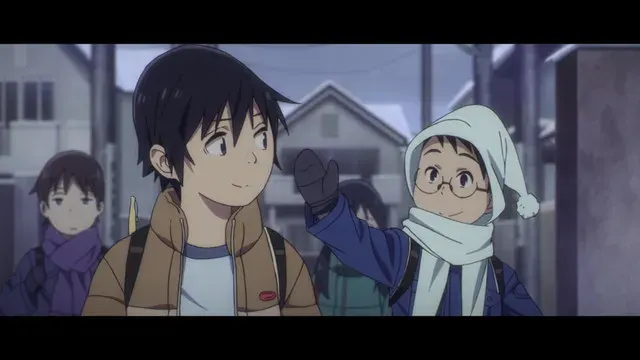
That information is not a complete solution. Satoru still needs to work out what is wrong, who is in danger and whether he can intervene. The opening traffic incident illustrates the distinction between receiving a warning and successfully acting on it. He can change what happens, but his intervention also puts him at risk.
The official synopsis of episode one describes both the traffic accident and a later incident near a supermarket. These encounters establish Revival as part of Satoru's life before the central murder mystery begins.
Why does Revival send Satoru back eighteen years?
The unusually long jump follows the death of Sachiko, Satoru's mother. Instead of repeating the immediate circumstances of her murder, he returns to 1988, when he was a child. His adult memories allow him to recognize the significance of events that his classmates have no reason to fear yet.
The English publisher's synopsis of Erased volume one identifies the eighteen-year reversal and Kayo Hinazuki's fate as central to his attempt to change the past. Saving his mother is therefore connected to a much older mystery rather than simply avoiding one encounter in adulthood.
The important distinction is that the story connects the tragedies narratively, not through a precise mathematical rule. It never supplies a formula explaining why eighteen years is the necessary interval. Treating the jump as a chance to address the underlying danger makes sense of the plot, but it does not establish that Revival always calculates the earliest possible cause of a tragedy.
Does Satoru control his time travel?
Not reliably. Satoru can decide what to do once he arrives in the past, and his determination to change events becomes increasingly important. However, he does not possess a device or a repeatable technique that lets him choose any destination. Even knowing that Revival exists does not guarantee that another opportunity will arrive when he needs one.
This limitation is what makes the mystery tense. A character who could freely revisit every conversation would eventually be able to test almost any hypothesis. Satoru instead has to make decisions with incomplete information, and the people he is trying to protect have their own fears, routines and relationships.
The licensed manga's second collected volume synopsis describes an unsuccessful attempt to change Kayo's fate followed by another opportunity to return to 1988. It is a useful reminder that having knowledge of a previous outcome is not the same as knowing how to prevent it.
Does he travel physically or return to his younger body?
During the childhood portion of the story, Satoru occupies his younger self rather than appearing as a second, adult version of himself. His knowledge comes from adulthood, but his circumstances are those of a child. He cannot simply exercise the independence, authority or resources that an adult might have.
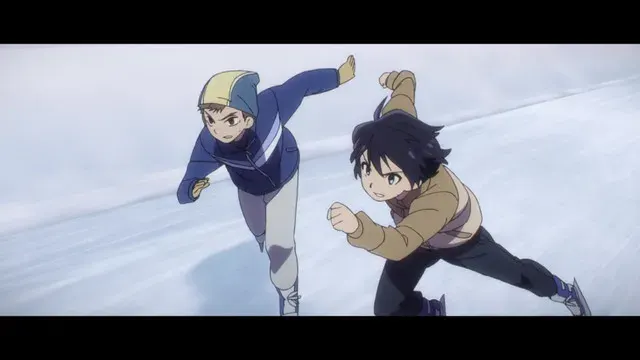
This creates a practical problem that many time-travel stories avoid. Adults may dismiss his concerns, and he must find ways to earn the trust of children who do not know what he knows. His relationships become as important as his memories. The story is interested in whether someone will notice another person's suffering, not just whether someone can predict the next event.
Where did Satoru get Revival?
There is no confirmed origin explained in the television anime. The ability is already present when the story begins, and its workings are presented through Satoru's experiences rather than an account of how he acquired it. The licensed manga's introductory description likewise presents it as an unexplained phenomenon. That is not evidence for a secret inventor, a supernatural patron or a hereditary power.
It is possible to interpret Revival as a second chance shaped by Satoru's regrets. That reading fits the emotional direction of Erased, but it should not be mistaken for a canon explanation of the power's source. The story can give the ability thematic meaning without explaining its physical mechanism.
Why Revival matters more than its origin
Erased uses time travel to turn hindsight into responsibility. Satoru remembers people he once failed to understand, but he must learn how to help them in the present moment of their lives. Knowing the future does not automatically make him a good friend or a capable investigator.
For a different mystery built around the limits of a protagonist's knowledge, see our explanation of Odokawa's perception in Odd Taxi. That article contains major spoilers for Odd Taxi, so save it until after watching.
If the emotional consequences of Satoru's choices are what interest you most, our psychological drama anime recommendations offer more stories where understanding people matters as much as solving a puzzle.
Ultimately, Revival gives Satoru opportunities rather than guaranteed victories. Its origin remains mysterious, but its role is clear: it allows him to confront events he once could not change, while leaving the difficult work of changing them to him and the people around him.