
Yes—Sparks of Tomorrow is worth watching, especially if you enjoy character-driven science fiction, historical fantasy, and Kyoto Animation’s emotionally precise visual storytelling. Its steampunk Kyoto is not merely a decorative backdrop filled with gears and machines. The city’s dependence on steam shapes its class divisions, atmosphere, fears, and ideas about progress, while electricity becomes a dangerous promise of a cleaner future.
The series is not an action-heavy revolution story, at least in its opening stretch. It is a quieter drama about grief, faith, invention, and two young people learning to believe in a future neither can reach alone. That deliberate pace may not work for everyone, but the unusual setting and visual craft give it an identity far beyond a standard period romance.
Spoiler note: This review discusses the premise and early character setup but avoids major plot revelations.
Quick verdict
| Question | Answer | |---|---| | Is Sparks of Tomorrow worth watching? | Yes, particularly for viewers who value atmosphere, character animation, and emotional science fiction. | | What genre is it? | Historical fantasy, steampunk science fiction, romance, adventure, and coming-of-age drama. | | Where can you watch it? | Netflix streams the series worldwide. | | How long is it? | Netflix lists the season as five episodes, with episodes running around 25 minutes. | | Who made it? | Kyoto Animation, directed by Minoru Ota. | | Is it fast-paced? | Not consistently. The series prioritizes character relationships and world-building over constant action. |
What is Sparks of Tomorrow about?
Sparks of Tomorrow takes place in an alternate version of early 20th-century Kyoto. In this timeline, steam power became dominant, filling the city with smoke and leaving electricity as an unrealized dream rather than an everyday technology.
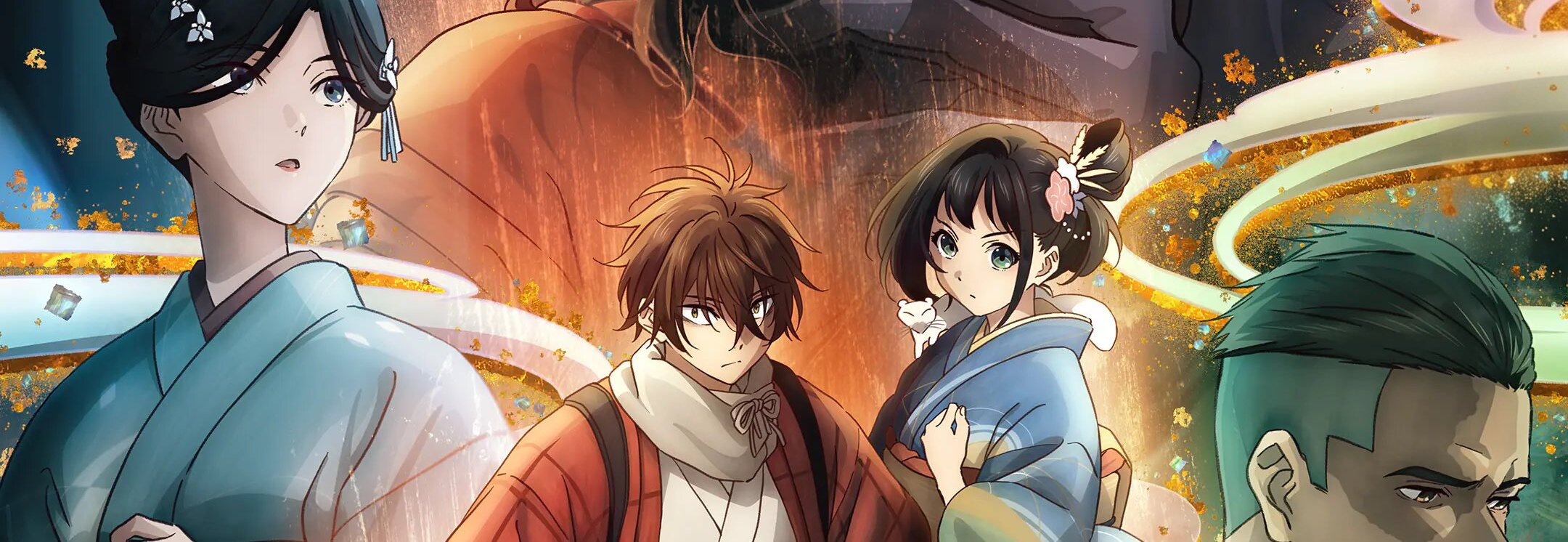
Kihachi Sakamoto once imagined an “Age of Electricity” with his older brother, Seiroku. After losing him, Kihachi grows cynical and distrustful. Inako Momokawa, meanwhile, is a deeply religious young woman who hides her own ambitions and unresolved grief over her mother.
Their lives become connected through the mysterious 20th Century Electrical Catalog, a collection of imagined inventions that offers a glimpse of a different future. The catalog is more than a plot device: it represents the possibility that imagination can survive even when the people who inspired it are gone.
The anime adapts Hiro Yuki’s novel 20 Seiki Denki Mokuroku, published through Kyoto Animation’s KA Esuma Bunko imprint.
What makes its steampunk Kyoto different?
Many steampunk stories begin with the visual language of the genre: brass machinery, airships, goggles, pipes, and elaborate engines. Sparks of Tomorrow begins somewhere more interesting—with the social cost of a world that chose steam.
Kyoto is not presented as a playful mechanical fantasy. It is beautiful, but it is also suffocating. Smoke hangs over streets and rooftops, making technological progress feel physically present in the air. The setting asks a simple but powerful question: What happens when the technology that built society also prevents it from imagining something better?
Steam is the status quo, not the future
In most steampunk fiction, steam technology feels advanced. Here, it has become the old order. It powers the city, supports existing institutions, and defines what people consider realistic.
Electricity therefore carries a different meaning. It is not just a new scientific discovery. It threatens habits, businesses, hierarchies, and assumptions. To believe in electricity is to challenge the world’s accepted direction.
That reversal makes the series’ central conflict more compelling. Kihachi is not simply an inventor trying to build a machine; he is trying to prove that history does not have to continue along the path everyone already accepts.
Kyoto’s history remains visible beneath the machinery
The series does not replace Kyoto with a generic European-inspired industrial city. Temples, workshops, family businesses, religious practice, traditional clothing, and narrow streets remain central to its identity.
This creates a productive tension between preservation and change. The question is not whether tradition should disappear. It is whether tradition can survive without becoming a prison.
Inako embodies that tension especially well. Her faith is not treated as simple ignorance, nor is invention presented as automatically superior to belief. Her spiritual worldview gives her emotional resilience, while Kihachi’s technical knowledge gives shape to possibilities she can sense but cannot build herself.
Their partnership allows the anime to explore progress without reducing the debate to “science versus religion.” Both characters are searching for a way to live with grief, and both need a language the other understands.
The world feels handmade
Kyoto Animation’s visual approach is one of the strongest reasons to watch the series. Official materials describe its backgrounds as impressionistic, and that quality is visible in the use of softened edges, layered smoke, warm light, and environments that often resemble painted memories rather than rigid architectural diagrams.
The result suits the story. This is a world caught between what exists and what could exist, so the backgrounds often feel both concrete and dreamlike.
Machinery is detailed, but the anime rarely treats mechanical complexity as an end in itself. The most memorable images come from the contrast between metal and emotion: a workshop illuminated by a fragile light, a face reacting to an impossible invention, or smoke briefly parting to reveal open sky.
The real subject is grief disguised as invention
The electrical catalog gives the series its mystery, but grief gives it weight.
Kihachi’s cynicism is not a rejection of electricity. It is a defense against caring about the dream he once shared with his brother. Building again would mean accepting that the dream still matters—and that Seiroku is no longer there to complete it with him.
Inako carries a parallel wound. She is outwardly hopeful, but her devotion also gives her a way to contain desires she has been taught to suppress. Her optimism is not naïveté; it is an active decision to believe that loss does not have to end every unfinished hope.
This is where Sparks of Tomorrow feels recognizably like a Kyoto Animation production. The studio’s best work often turns small gestures into emotional events. A pause before answering, a hand tightening around an object, or a character looking away can reveal more than a long speech.
The machines matter because of what people ask them to repair. Some characters want electricity to change the city. Others want it to preserve a memory, fulfill a promise, or reach someone who is gone. The anime understands that invention is rarely emotionally neutral.
Kihachi and Inako make the premise work
The central pair are built around contrast.
Kihachi is practical, suspicious, and emotionally guarded. Inako is intuitive, trusting, and willing to believe before she fully understands. That combination could easily become predictable, but their differences are tied to the themes rather than used only for romantic comedy.
Inako gives Kihachi something he has lost: faith in an unfinished idea. Kihachi gives Inako something she lacks: the ability to turn hope into a physical object.
Their relationship works best when the series lets them challenge each other. Inako’s belief can push Kihachi forward, but it can also seem reckless. Kihachi’s skepticism can protect them, but it can also become an excuse to avoid vulnerability.
The romance grows from collaboration rather than instant attraction. They become important to each other because each recognizes a part of the future the other cannot create alone.
Is the pacing too slow?
This is the largest reservation.
The premise suggests political upheaval, industrial conflict, and a technological revolution. The opening episodes, however, spend considerable time on introductions, personal grief, comic misunderstandings, and smaller inventions.
For viewers expecting a fast-moving conspiracy thriller, this can feel like the story is delaying its most exciting ideas. Early audience discussion has reflected that split: the art direction and animation have attracted strong praise, while some viewers have questioned whether the narrative moves quickly enough.
That criticism is fair. The series occasionally creates the expectation of a much larger conflict and then returns to intimate character drama. Whether this feels patient or frustrating depends on what you want from it.
The slower structure is more effective when viewed as intentional. The anime is showing why technological change matters at a human scale before expanding its consequences. Electricity must first change one workshop, one grieving family, or one damaged relationship before it can change Kyoto.
Why Kyoto Animation is the right studio for this story
The production staff includes director Minoru Ota, series composer Tatsuhiko Urahata, character designer and chief animation director Kohei Okamura, world-building contributor Takaaki Suzuki, and composer Hitomi Koto.
That combination supports the show’s two most important qualities: a believable alternate history and expressive character acting.
A weaker adaptation might have emphasized the catalog’s gadgets and treated the cast as guides through the world. Kyoto Animation instead makes the characters’ physical behavior part of the storytelling. Comedy emerges from timing and movement, while grief appears in restraint.
The studio also understands how to make beauty serve a theme. The smoke-filled city is visually attractive, but the anime never lets viewers forget that the haze represents stagnation. Electricity is striking because it changes not only the light in a scene but also the emotional possibilities within it.
Who should watch Sparks of Tomorrow?
You should try the series if you enjoy:
- Historical settings altered by speculative technology
- Slow-burn romance built through shared work
- Stories about grief, recovery, and inherited dreams
- Detailed background art and expressive character animation
- Science fiction where inventions carry emotional meaning
- Compact seasonal anime that can be watched without a long commitment
It may not be the best choice if you primarily want:
- Frequent action scenes
- Rapid plot twists
- A hard-science explanation for every invention
- A dark political thriller from the opening episode
- A conventional steampunk adventure centered on battles and spectacle
Is Sparks of Tomorrow similar to Violet Evergarden?
The comparison is understandable because both are Kyoto Animation dramas with meticulously crafted settings and characters shaped by loss. However, Sparks of Tomorrow has a more playful romantic energy and places invention at the center of its emotional language.
Violet Evergarden often uses letters to connect people who cannot express themselves directly. Sparks of Tomorrow uses machines in a similar way. An invention can become a message, a memorial, or proof that somebody’s dream was heard.
The new series is therefore not a steampunk copy of Violet Evergarden. It shares Kyoto Animation’s interest in communication and grief, but expresses those themes through technological possibility rather than written words.
Final verdict: Is Sparks of Tomorrow worth watching?
Sparks of Tomorrow is worth watching because its world has a clear thematic purpose. Steam represents a society trapped inside the achievements of yesterday, while electricity represents a future people are afraid to trust. Kihachi and Inako stand between those forces, carrying private grief into a struggle over what Kyoto might become.
Its early pacing is not flawless, and viewers waiting for a sweeping industrial revolution may find the personal drama too dominant. Yet the series’ strongest qualities—its painterly backgrounds, expressive animation, unusual Japanese steampunk setting, and emotionally grounded use of invention—make it one of the more distinctive science-fiction anime of 2026.
The best reason to watch is not simply that Kyoto Animation made it beautiful. It is that the beauty communicates the central idea: a different future begins when someone is willing to imagine light inside a city that has accepted smoke.
Frequently asked questions
Frequently asked questions
Is Sparks of Tomorrow worth watching?
Yes. It is especially worthwhile for viewers who enjoy atmospheric science fiction, historical fantasy, slow-burn romance, and Kyoto Animation’s detailed character acting. Its pace is more deliberate than action-focused.
What makes Sparks of Tomorrow's Kyoto different?
The series imagines an early 20th-century Kyoto where steam power became dominant and electricity remained an unrealized possibility. Traditional religious and commercial life exists alongside industrial machinery, making technological progress a social and emotional conflict rather than simple decoration.
How many episodes does Sparks of Tomorrow have?
Netflix lists Sparks of Tomorrow as a five-episode series, with episodes running approximately 25 minutes.
Where can I watch Sparks of Tomorrow?
Sparks of Tomorrow is available for worldwide streaming on Netflix.
Is Sparks of Tomorrow based on a novel?
Yes. The anime is based on Hiro Yuki’s light novel 20 Seiki Denki Mokuroku, published by Kyoto Animation under its KA Esuma Bunko imprint.
Sources & references8 sources
- Netflix Tudum — Behold the Electrifying New Anime Sparks of Tomorrow
- Netflix — Sparks of Tomorrow Official Series Page
- Netflix Media Center — Sparks of Tomorrow
- About Netflix — AnimeJapan 2026 Announcements
- About Netflix — Annecy 2026 Anime Slate
- Kyoto Animation — Sparks of Tomorrow
- Sparks of Tomorrow Official Website
- Decider — Sparks of Tomorrow Netflix Review