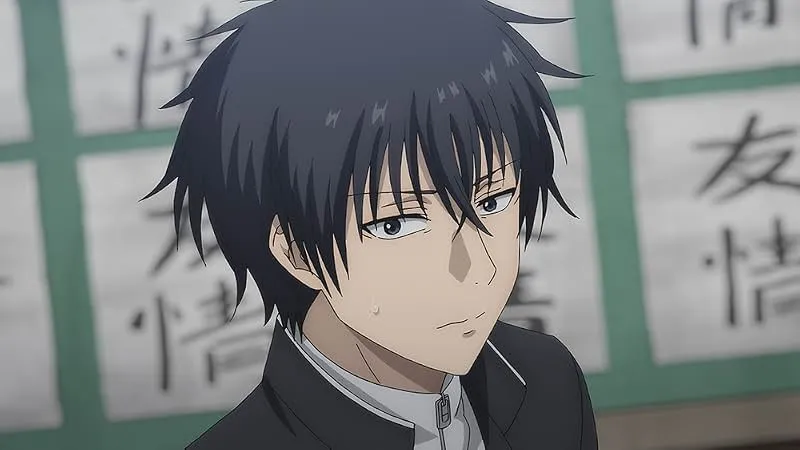

Best high-stakes game anime: what this ranking includes
The most gripping game anime do not need a giant arena or a mysterious masked host. They need rules that matter, people who interpret those rules differently, and consequences that change how the characters behave. This guide covers lethal contests, debt traps, psychological wagers, and competitive games where losing threatens identity or livelihood. Those are related experiences, not identical genres. If you specifically want a literal death game, look for the entries marked lethal rather than assuming every recommendation involves contestants killing one another.
We ranked these series by four editorial criteria: whether the rules are understandable, how inventively characters use them, whether decisions have lasting consequences, and how well the anime develops people beyond their tactical function. We also consider the quality of the anime adaptation as a viewing experience, not the reputation of its source manga or game alone. The ranking is an editorial judgment rather than a measured popularity poll. Major twists and endings are deliberately avoided.
Quick comparison: which game anime should you watch?
Kaiji is the strongest choice for economic desperation and escalating psychological pressure. Tomodachi Game centers friendship, secrecy and debt. Danganronpa is the murder-mystery option, while Darwin's Game favors supernatural combat. The Future Diary blends a deadly contest with an unstable relationship. Kakegurui is theatrical school gambling rather than a conventional death match. One Outs uses professional baseball as a psychological wager. Death Parade turns games into ethical judgment, and Battle Game in 5 Seconds emphasizes tactical superpowers. BTOOOM! is the island-survival choice. Some adaptations stop before their source stories conclude; do not expect every entry to deliver a complete ending.
1. Kaiji: Ultimate Survivor | Best for desperate psychological gambling
Kaiji Ito enters a world where debt and manipulation turn seemingly simple games into tests of judgment. The series' great strength is making small rules feel enormous. A card, a choice, or the way a player interprets a promise can determine whether someone escapes a terrible bargain. Instead of presenting Kaiji as an effortless genius, the story lets him panic, miscalculate and discover how fear distorts otherwise sensible decisions.
That vulnerability makes the suspense unusually tangible. You understand why a losing player might accept an even worse risk and why an opponent with money or institutional power can tilt a supposedly fair contest. The extended internal monologues and deliberately heightened reactions will not suit everyone, but they make each choice legible. Start here if you want strategic drama with a pointed interest in inequality and coercion, not polished heroes who always have a secret master plan.
2. Tomodachi Game | Best for betrayal and trust
Five friends are pulled into a debt-related competition that tests whether they really know one another. Tomodachi Game builds its puzzles around information: who is telling the truth, what has been withheld, and whether apparent cooperation is actually a trap. Yuichi Katagiri is compelling because his understanding of human behavior can be more alarming than the game organizers' instructions. The premise is confirmed in Crunchyroll's series description, which emphasizes debt, friendship and psychological tests.
Unlike a puzzle series that rewards a viewer for solving every problem independently, this one often withholds a character's reasoning until a dramatic reversal. That can feel exhilarating or contrived depending on your taste. The anime also covers only part of a larger story, so choose it for a season of escalating suspicion rather than guaranteed full narrative closure. Its most interesting question is whether winning through manipulation destroys the very trust a contestant claims to protect.
3. Danganronpa: The Animation | Best for a locked-room murder-game premise
Students confined inside Hope's Peak Academy face a grim system in which murder and investigation become intertwined. The hook is not merely who commits a crime. It is how the rules transform ordinary social contact into a source of danger, and how a group tries to distinguish evidence from deception when everyone has reason to be afraid. The courtroom-style confrontations give the story an unusually recognizable game structure.
The anime adaptation moves quickly through material originally designed for an interactive visual novel. That compression is its main drawback: clues, relationships and emotional beats have less room to breathe than they do when a player investigates personally. Still, it offers an accessible introduction to the franchise's central setup. Pick it for stylized mystery, eccentric characters and escalating revelations; consider the original game if you want more time with the deduction process.
4. Darwin's Game | Best for mobile-app survival battles
Kaname Sudo accepts an invitation to a mysterious smartphone game and discovers that participation is far more dangerous than it appeared. Competitors possess abilities called Sigils, turning encounters into fights where knowing an opponent's power can matter as much as physical strength. Crunchyroll's official series listing establishes the app premise, Sigils and the inability to simply quit. The result is a more action-driven experience than Kaiji or Tomodachi Game.
Its most enjoyable tactical moments arise when characters combine limited knowledge, alliances and ability constraints. The show is less persuasive when a spectacular fight pushes those constraints into the background. If you want supernatural combat with a survival-game framework, this is a strong entry point. If you want realistic probability, economics or fair-play deduction, choose something else. The available anime season should not be mistaken for a complete adaptation of every manga development.
5. The Future Diary | Best for an unpredictable deadly contest
Yukiteru Amano becomes involved in a competition among people whose future-predicting diaries grant different advantages. The clever premise creates an immediate asymmetry: knowing what may happen is useful, but each diary's limitations affect how its owner can act. Yukiteru's alliance with Yuno Gasai adds an intensely personal dimension to the game, turning safety and dependence into inseparable problems.
The show prioritizes emotional extremes and surprise over consistently restrained strategic logic. Some decisions are deliberately irrational because the characters are frightened, possessive or unstable. That is part of its identity, but it can frustrate viewers who want every move to resemble a chess problem. Content includes significant violence and disturbing relationship dynamics. Watch it for chaotic suspense and psychological melodrama, not as a model of healthy romance or realistic competition.
6. BTOOOM! | Best for island survival and resource management
BTOOOM! places players on an island where the explosive weapons associated with a video game become a deadly reality. Its central appeal is translating game familiarity into survival uncertainty. Players must understand weapon types, terrain, limited supplies and the intentions of strangers. Unlike a fantasy battle where power levels settle everything, the environment and the cost of making contact with another person frequently shape the danger.
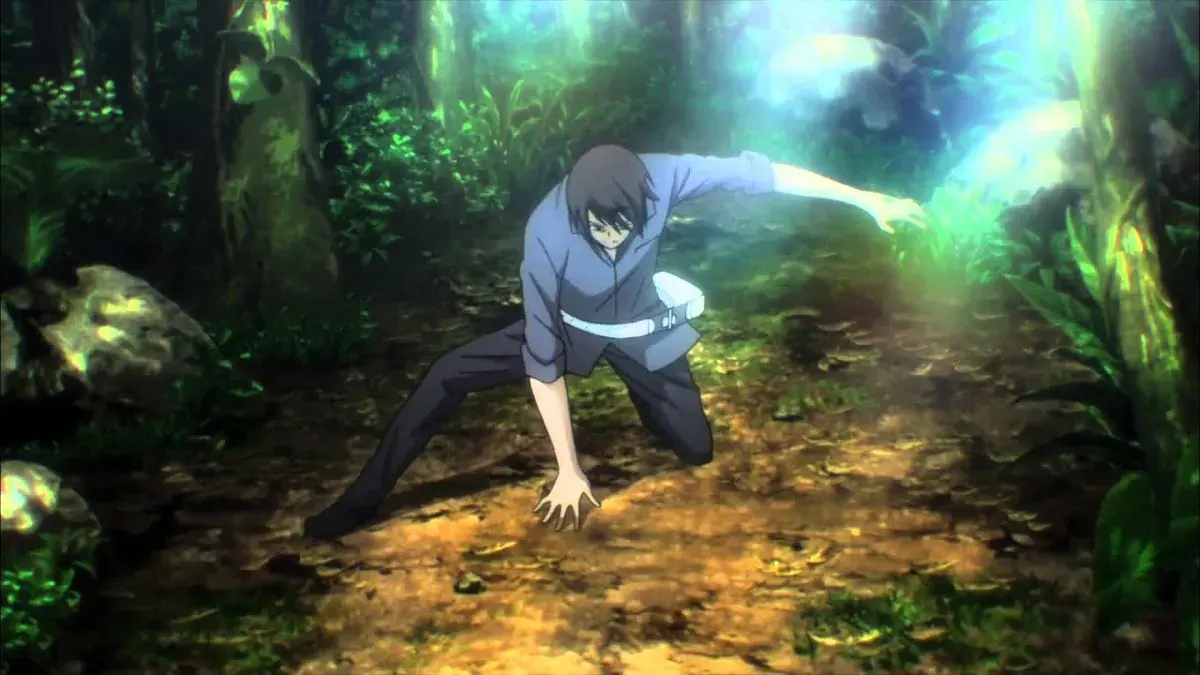
The anime's island setting creates a strong immediate hook, but the adaptation does not provide a complete resolution to the entire source narrative. Its violence and coercive situations also make it a poor fit for viewers seeking a light tactical adventure. It works best for someone interested in the uneasy line between competitive gaming habits and actual human consequences. The story is most effective when characters realize that treating people as disposable opponents is itself a disastrous survival strategy.
7. One Outs | Best for rule exploitation without a death match
One Outs is a deliberate exception to the literal death-game category. Toua Tokuchi is a baseball pitcher whose unusual contract and extraordinary reading of opponents transform each match into a wager. The rules are publicly recognizable, but the real contest concerns incentives, expectations and the pressure of making decisions while another person is trying to manipulate you. That makes it a surprisingly close relative of gambling thrillers.
The series rewards attention to what an opponent believes rather than what a protagonist can physically do. It is also a useful contrast to supernatural game anime: strategy can feel dramatic without a hidden power or an elaborate execution device. You do not need deep baseball knowledge to appreciate its central mind games. For another kind of strategic protagonist, our analysis of anime protagonists who solve problems through strategy explores why demonstrated reasoning matters more than simply calling a character a genius.
8. Kakegurui | Best for theatrical gambling and status games
At Hyakkaou Private Academy, gambling determines social standing, and transfer student Yumeko Jabami approaches the school's contests with unsettling enthusiasm. Netflix's official synopsis confirms the school hierarchy built around gambling. The appeal is spectacle: players read faces, manipulate rules, and try to break an opponent's confidence while the presentation exaggerates every shift in power.
Kakegurui is not a straightforward battle-to-the-death series. Its threats involve status, debt, humiliation and control, with some extreme wagers. The series also has stylized suggestive imagery and intense reactions, so viewers looking for understated realism may prefer Kaiji. Its distinctive idea is that winning and enjoying risk are different motives. Yumeko often disrupts a game precisely because she values the thrill more than the conventional reward, which makes her difficult to predict.
9. Battle Game in 5 Seconds | Best for ability-based tactical puzzles
After an abrupt encounter, Akira Shiroyanagi is drawn into contests built around unusual powers. The hook is not just that contestants receive abilities. It is that an ability's usefulness depends on what other people understand about it, creating opportunities for bluffing and creative interpretation. The series combines tournament-style conflict with a game of incomplete information.
Its strengths are quick reversals and a protagonist who thinks about the opponent's assumptions. Its weaknesses include uneven presentation and a reliance on explanations that can make cleverness feel more asserted than demonstrated. Viewers seeking a polished character drama may find it less satisfying than the top entries. Choose it when you want a compact run of powers-as-puzzles and are comfortable with a story that does not resolve every larger mystery within its animated portion.
10. Death Parade | Best for moral questions disguised as games
Death Parade is another boundary case, and that boundary is exactly why it belongs here. Visitors to a mysterious bar are asked to participate in games that reveal reactions under extraordinary pressure. The series is not primarily about contestants defeating an organization or escaping a tournament. It asks whether a person's behavior in a frightening, artificial situation can justify a judgment about their entire life.

That change of perspective gives the list a necessary counterpoint. Many game stories assume the most strategic survivor deserves to win; Death Parade questions the fairness of making human worth depend on a staged contest at all. The atmosphere is reflective and sometimes devastating, with themes of death and grief. Our psychological drama recommendations discusses it alongside other character-centered psychological dramas. Watch it if you want ethical discomfort more than tactical victories.
How to choose without mixing up different subgenres
For a literal lethal competition, begin with Danganronpa, Darwin's Game, The Future Diary or BTOOOM!. For a contest built around deception, start with Kaiji or Tomodachi Game. For dramatic gambling without the same murder-game premise, choose Kakegurui or One Outs. For moral questions about games as systems of judgment, Death Parade is the most distinctive choice. This distinction matters because a recommendation that promises a death game and delivers a sports wager can disappoint even when the show is excellent.
If your favorite part is the cat-and-mouse reasoning rather than the rules themselves, Death Note review examines how Death Note builds tension from knowledge and secrecy. To explore more titles based on mood, genre and length, the AnimeSparks recommendation finder can help narrow your next watch. These are complementary resources rather than replacements for the ten specific recommendations above.
Frequently asked questions
What is the best death game anime to start with?
Danganronpa offers a recognizable murder-game setup, while Darwin's Game offers more direct action. Kaiji is the stronger starting point if you care most about the psychology of wagers rather than a literal death match.
Are Kakegurui and One Outs actually death game anime?
No. Both are high-stakes competitive stories included for readers who enjoy deception, rule exploitation and escalating risk. The article labels them clearly to avoid conflating distinct premises.
Which of these anime has the most understandable strategy?
Kaiji and One Outs frequently show how rules, incentives and fear influence decisions. Tomodachi Game is more interested in dramatic psychological reveals, and Darwin's Game mixes tactical choices with supernatural action.
Do all ten anime have complete endings?
No. Several anime adapt only a portion of their source material. Check adaptation coverage before starting if a fully resolved ending is important to you; this ranking evaluates the animated viewing experience, not unadapted conclusions.
Final recommendation
Kaiji is the overall pick because its rules, pressure and character flaws reinforce one another. Tomodachi Game is the most direct recommendation for fans of betrayals and social manipulation, while Darwin's Game is easier to recommend to someone who wants action first. The real value of this subgenre is its range: the same basic idea of a contest can reveal greed, fear, ingenuity, friendship or the cruelty of judging people by a single decision.