
Sword Art Online (2012) didn't just popularize virtual reality anime—it fundamentally transformed how the medium approaches gaming, digital identity, and escapism. Despite valid criticisms, SAO created the blueprint for "trapped in a game" stories and sparked conversations about VR technology years before the metaverse became mainstream.
When Sword Art Online premiered in 2012, it accomplished something few anime achieve: it created a cultural moment that defined a generation of animation.
Love it or hate it, SAO's impact is undeniable. It shaped modern isekai more than most fans realize, becoming the template countless creators have followed, refined, or rebelled against.
The Pre-SAO Landscape
Virtual reality existed in anime before 2012—.hack//Sign (2002) explored similar concepts a decade earlier. But these shows remained niche.
The early 2010s created perfect conditions for SAO's success. MMORPGs like World of Warcraft peaked culturally. Oculus Rift's Kickstarter made VR headsets seem like near-future reality. Streaming services democratized anime access globally.
Into this landscape came Sword Art Online, adapting Reki Kawahara's light novels. The timing was impeccable.
What SAO Did Differently
The Death Premise That Changed Everything
SAO's core hook remains brilliant: you die in the game, you die in real life.
Players couldn't log out. Removing the NerveGear headset meant instant death. Dying to a boss killed your physical body. Suddenly, a video game became the most terrifying place imaginable.
This premise asked a question every MMO player has considered: what if this world was real? SAO didn't just pose it—it committed fully to exploring it.
These psychological themes gave SAO depth often overshadowed by later criticism, showing how virtual experiences create real trauma.
Treating Virtual Romance as Real
SAO's most influential innovation was treating Kirito and Asuna's relationship with complete sincerity.
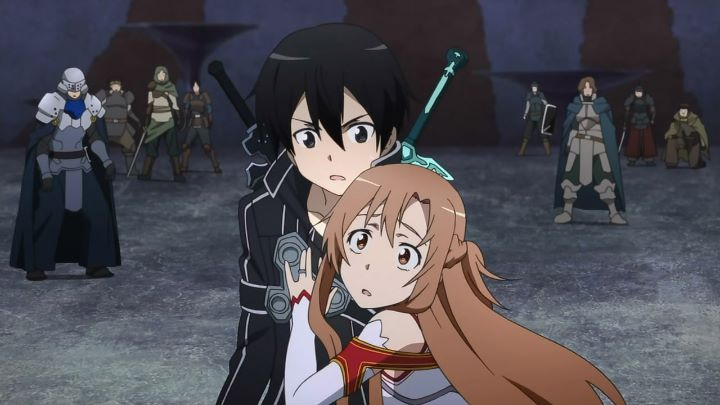
They get married in-game, buy a house, live as husband and wife. The series never winks at the audience. Their marriage is portrayed as emotionally legitimate as any real-world relationship.
This was radical for 2012. SAO asked: if you fall in love in a virtual world, is that love less real? The answer—a resounding "no"—anticipated modern discussions about online relationships and digital identity by nearly a decade.
Production Quality That Set Standards
Studio A-1 Pictures delivered stunning animation for 2012 television. Fight choreography was fluid. Digital worlds felt vast and immersive. Yuki Kajiura's orchestral score elevated every emotional beat.
SAO understood spectacle. Boss battles felt epic. Each virtual world had distinct aesthetics—medieval Aincrad, fairy-filled ALfheim, gun-focused Gun Gale Online.
This commitment to visual storytelling set expectations for every VR anime that followed.
The Blueprint for Modern Isekai
The Overpowered Protagonist Template
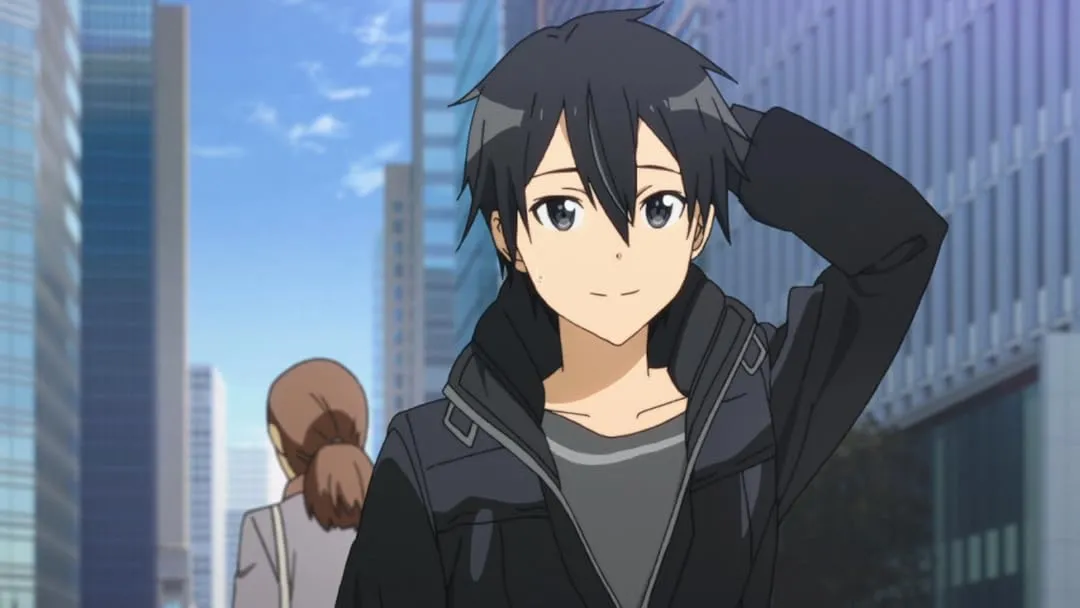
Kirito became the archetype for "OP isekai protagonist." He's skilled at everything, wins through superior ability, attracts multiple female characters.
This formula has been endlessly copied, parodied, and criticized. Shows like The Eminence in Shadow exist specifically to satirize this trope, while Re:Zero subverts it by making the protagonist weak and repeatedly killable.
The "solo player who's secretly the strongest" became isekai's most recognizable type because of Kirito.
The Harem as Standard Feature
SAO normalized harem dynamics in isekai. Asuna is primary love interest, but Lisbeth, Silica, Sinon, and others develop feelings for Kirito.
This structure became so standard that viewers now expect it. Nearly every modern "trapped in a game" anime features a male protagonist surrounded by female admirers.
Multiple Virtual Worlds as Narrative Device
SAO pioneered protagonist moving between different virtual worlds—Aincrad, then ALfheim, then Gun Gale Online, then Underworld.
This solved a crucial problem: how do you continue after the initial premise resolves? SAO's answer—new virtual world, new rules—has been adopted by countless successors.
The Cultural Phenomenon
Mainstream Recognition
Even people who don't watch anime recognize Kirito's black coat and dual swords. SAO transcended its medium, discussed in gaming communities, tech forums, and general pop culture.
The franchise exploded commercially—over 30 million light novel copies sold, theatrical films topping Japanese box offices, a Netflix live-action adaptation. This success validated virtual reality anime as viable and profitable.
Inspiring Real VR Development
Palmer Luckey, creator of Oculus Rift, openly discussed how SAO inspired his VR headset work. The series sparked genuine interest in developing full-dive VR technology.
In 2022, Luckey built a modified VR headset mirroring SAO's death mechanic—as art piece rather than commercial product. That SAO inspired actual VR development demonstrates its cultural penetration beyond entertainment.
Setting Conversation Terms
SAO established vocabulary dominating VR discussions in anime. Terms like "full dive," "brain link," "WorldSeed platform" became shorthand for virtual reality mechanics.
Every new VR anime gets compared to SAO. It's the measuring stick every similar series must contend with.
The Valid Criticisms
Pacing Problems
The Aincrad arc's rushed pacing is SAO's most consistent criticism. The anime compresses two years into 14 episodes, skipping floors and crucial character development.
This undermines emotional stakes. Deaths feel less impactful when we barely knew victims. Kirito's progression from level 1 to 96 happens in time skips, making his skill feel unearned.
Later arcs improved pacing significantly, particularly Alicization, but first impressions matter.
Character Development Issues
Kirito works as concept—traumatized solo player forced to connect—but execution leaves much desired. He rarely grows meaningfully. His overpowered nature removes tension.
Asuna's regression is particularly frustrating. Aincrad establishes her as capable and strong-willed. Later arcs frequently reduce her to damsel-in-distress needing rescue.
Supporting cast often feels one-dimensional compared to ensemble shows, existing primarily to admire Kirito rather than develop their own arcs.
Problematic Content
SAO's handling of sexual assault content is its most legitimate criticism. Multiple arcs feature female characters being threatened or assaulted, often graphically for shock value.
These scenes don't meaningfully explore trauma—they exist as motivation for male characters or evidence of villain depravity. Creator Reki Kawahara has apologized, and recent arcs largely avoid them. But damage to reputation remains justified.
The Shows That Learned From SAO
Log Horizon (2013) focused on politics, economics, and society-building instead of individual heroics, resulting in more thoughtful exploration of trapped-in-MMO reality.
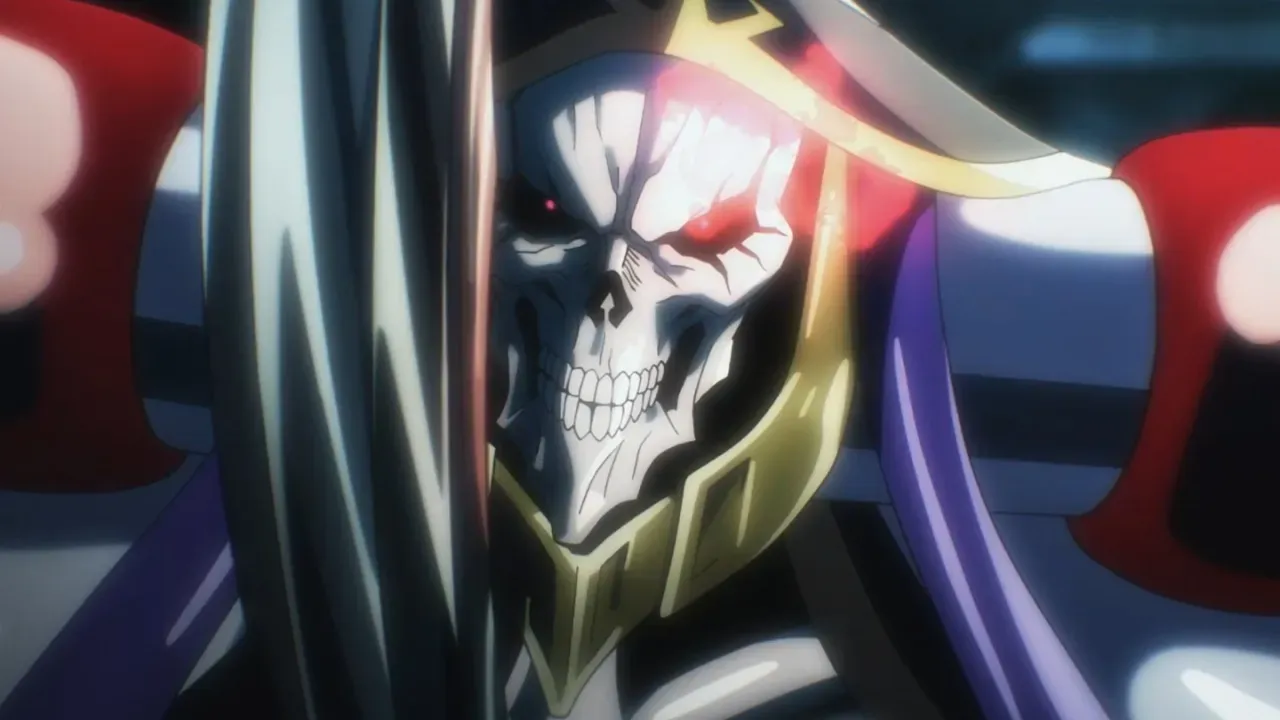
Overlord (2015) flipped the script by making the protagonist the villain, exploring power dynamics from the opposite perspective.
86: Eighty-Six (2021) used VR mechanics to explore war, racism, and dehumanization, demonstrating how virtual reality concepts could tackle serious themes with nuance SAO occasionally lacked.
Each learned from SAO—adopting what worked, fixing what didn't, pushing the genre forward.
Why Divisiveness Proves Impact
Perhaps SAO's greatest achievement is how strongly people react to it—both positively and negatively.
Series that don't matter get ignored. SAO inspired passionate defenses and equally passionate critiques, generating more discussion than most anime receive.
This divisiveness sparked countless essays and debates that deepened critical engagement. Similar to how controversial works generate productive discourse, SAO's flaws and successes became teaching moments for understanding narrative craft.
The Evolution: Alicization
SAO's later arcs demonstrate growth the early series lacked.
The Alicization saga (2018-2020) addresses many criticisms. Pacing is more deliberate. Kirito faces genuine consequences. The Underworld's AI inhabitants receive deep characterization. Themes about consciousness and free will get explored with philosophical depth.
Even critics often acknowledge Alicization's improvements. The series matured alongside its original audience.
What SAO Teaches About VR's Future
SAO succeeded because it asked questions we're still grappling with:
- If we spend more time online than offline, which world is "real"?
- Can relationships formed digitally be as meaningful as physical ones?
- What ethical frameworks apply to virtual worlds?
These questions feel more relevant in 2026 than 2012. Remote work, social media, VR gaming, and metaverse concepts have made SAO's concerns increasingly pertinent.
The series anticipated conversations about digital life that mainstream culture is only now engaging seriously.
Conclusion
Sword Art Online changed virtual reality anime forever not by being perfect, but by being first to execute the concept with mainstream appeal at exactly the right cultural moment.
It created templates defining modern isekai. It inspired real VR development. It sparked conversations about digital existence that remain vital. It demonstrated virtual reality stories could achieve massive commercial success.
The series has valid flaws—pacing problems, character stagnation, problematic content. But dismissing SAO entirely means ignoring how fundamentally it reshaped anime's relationship with virtual reality and digital identity.
Every VR anime since exists in SAO's shadow, whether as homage, improvement, or deliberate rejection. That's the mark of something that changed the medium forever.
For better and worse, Sword Art Online remains the most influential virtual reality anime ever made.
Frequently asked questions
Frequently asked questions
Did Sword Art Online invent the isekai genre?
No. Isekai existed before SAO. However, SAO popularized the "trapped in a game" subgenre and helped bring isekai into mainstream consciousness, inspiring the explosion of isekai titles in the 2010s.
Why is Sword Art Online controversial among anime fans?
SAO is divisive due to pacing issues, inconsistent characterization (especially Asuna's reduced role), an overpowered protagonist, and problematic depictions of sexual assault. Fans appreciate its production quality, emotional core, and innovative premise.
How did Sword Art Online influence real VR technology?
Palmer Luckey (Oculus Rift creator) cited SAO as inspiration. The series sparked interest in full-dive VR and brain-computer interfaces. In 2022, Luckey built a modified headset mirroring SAO's death mechanic as art.
Is Alicization better than early Sword Art Online?
Many agree Alicization addresses earlier weaknesses—improved pacing, deeper characterization, genuine stakes, philosophical depth about consciousness. Even SAO critics often acknowledge Alicization's higher quality.
Should I watch Sword Art Online in 2026?
If you enjoy virtual reality concepts and romance-driven plots, yes—especially if you skip to Alicization after Aincrad. If you prioritize consistent characterization, you might prefer successors like Log Horizon or Overlord.